All You Need To Know About Bonds - A Comprehensive Guide
See how regulations shape bond markets, impacting pricing, liquidity, and risk. Learn global frameworks, ESG trends, and strategies for fixed-income success.
Apr 03, 202565.1K Shares880.7K Views

Bonds aren’t complex financial instruments wrapped in marketing fluff. They are simply debt contracts. If you think bonds are a magic bullet for easy money, you’re wrong. This article strips away the sugar-coating and gives you the truth no bullshit.
Over 10,000 words spread across multiple parts, you’ll get a no-frills, direct guide that digs deep into every aspect of bonds, from their basic definition to the intricacies of pricing, risks, and strategies. Whether you’re an investor, student, or someone who needs to understand fixed income, get ready for a blunt exploration that respects your time and intelligence.
What Are Bonds?
At their core, bonds are loans made by an investor to a borrower. The borrower might be a government, municipality, or corporation, and in return for the capital provided, the borrower agrees to pay interest at a predetermined rate and return the principal at maturity. There are no hidden agendas here. A bond is nothing more than an IOU with contractual obligations.
Bonds exist because entities be they governments or companies need to raise capital. Instead of issuing stock (which dilutes ownership), they borrow money. Investors buy bonds expecting predictable returns. If you’re looking for “guaranteed” income streams, bonds might seem attractive, but that guarantee is only as solid as the issuer’s ability to pay. In short, bonds are as risky as the borrower's creditworthiness.
Key Bond Terminology
To understand bonds, you must grasp the following terms. If you can’t handle these basics, you’re in over your head:
A. Principal (Face Value)
- Definition: The amount of money a bondholder will get back at maturity.
- Direct Fact:This is the baseline on which all interest calculations are made. Don’t assume it’s a flexible number; it’s fixed.
B. Coupon
- Definition:The periodic interest payment made by the issuer to the bondholder.
- Direct Fact:Coupon rates are expressed as a percentage of the face value. They’re not a “bonus” or a “perk” but the primary compensation for lending your money.
C. Maturity
- Definition: The time at which the bond issuer must return the principal.
- Direct Fact:Maturity can range from a few months (short-term) to 30 years or more (long-term). The longer the maturity, the greater the exposure to interest rate changes.
D. Yield
- Definition:The return an investor can expect if the bond is held to maturity.
- Direct Fact: Yield isn’t just the coupon rate; it also considers the bond’s price changes. If you pay more or less than the face value, your actual yield changes.
E. Current Yield And Yield To Maturity (YTM)
- Current Yield:The annual coupon payment divided by the current market price of the bond.
- YTM: The total return anticipated on a bond if held until it matures. It factors in all coupon payments and the difference between the purchase price and the face value.
- Direct Fact: These calculations are essential. If you’re not comfortable with these metrics, you should not be investing in bonds.
F. Duration
- Definition: A measure of a bond’s sensitivity to interest rate changes.
- Direct Fact: Duration is not the bond’s term to maturity. It’s a weighted average time until cash flows are received. A high duration means high interest rate risk.
G. Credit Risk And Ratings
- Definition:The risk that the issuer will default.
- Direct Fact:Rating agencies such as Moody’s, S&P, and Fitch provide grades to assess default risk. A bond’s yield will reflect its risk profile higher risk demands higher yield. If you don’t understand credit risk, you’re asking for trouble.
How Bonds Work
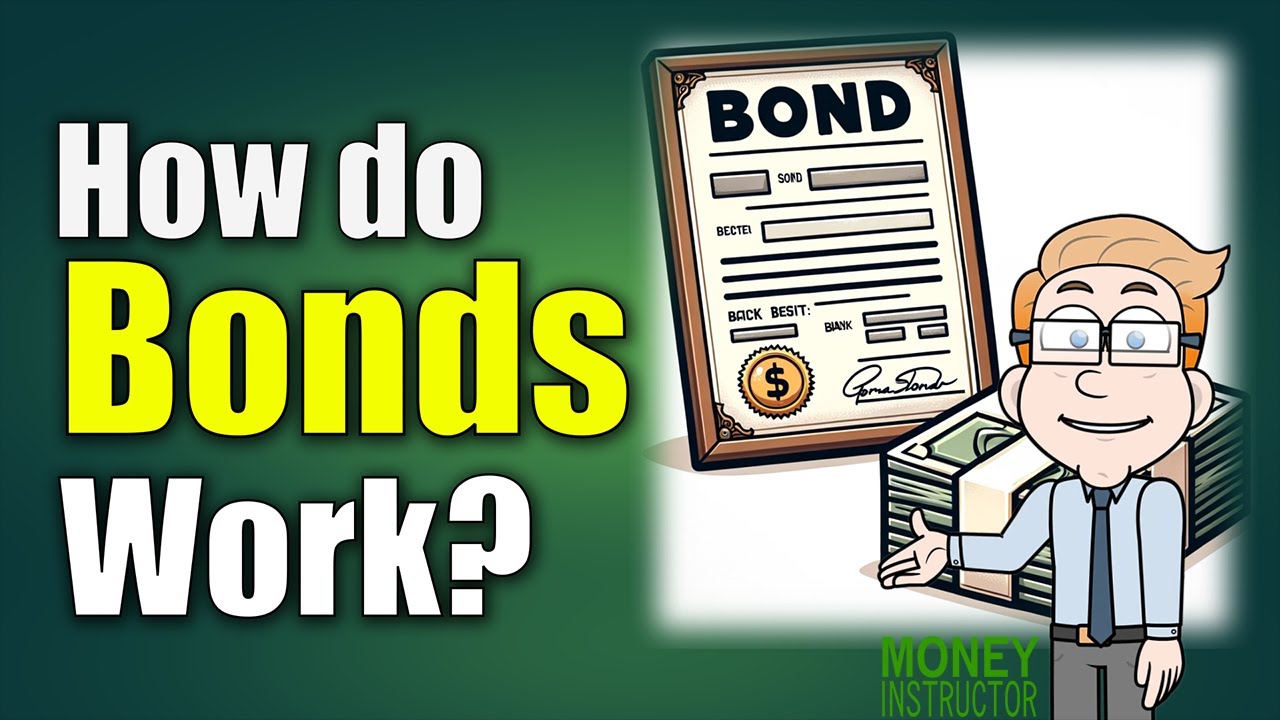
How do Bonds Work? Beginners Guide | Money Instructor
Bonds operate on a simple principle: you lend money, and in return, you get paid interest until the principal is returned at maturity. It’s as straightforward as that. But there’s more beneath the surface pricing dynamics, market demand, and interest rate fluctuations can affect a bond’s value.
Issuance And The Primary Market
When a bond is first issued, it’s sold on the primary market. The issuer sets the face value, coupon rate, and maturity. Institutional investors and retail buyers purchase these bonds, giving the issuer the funds they need immediately. There’s no negotiation here: the terms are fixed at issuance. If you think you’re going to haggle over bond terms, you’re out of luck.
Trading On The Secondary Market
After issuance, bonds trade on the secondary market. Prices fluctuate based on interest rate changes, credit rating adjustments, and overall market conditions. This means that if you decide to sell a bond before maturity, you might receive more or less than the face value. The market doesn’t care about your plans it’s governed by supply and demand and the issuer’s creditworthiness.
Interest Rate Impact
Interest rates have an inverse relationship with bond prices. When rates rise, existing bonds with lower coupons become less attractive, driving their prices down. Conversely, when rates fall, those bonds increase in value. This isn’t a complex theory it’s a direct market reaction. If you’re not tracking interest rate trends, you’re ignoring a critical risk factor.
Coupon Payments And Reinvestment Risk
Bondholders receive regular coupon payments, which are often reinvested. The reinvestment rate that you earn on those coupon payments can affect your overall return. If interest rates decline, your reinvested coupons may earn less, reducing the effective yield. Don’t assume that coupon payments are always reinvested at the same rate; the reality is less forgiving.
Types Of Bonds
Not all bonds are created equal. The issuer and structure determine a bond’s risk and return profile. Here are the main categories:
A. Government Bonds
- Treasury Bonds (T-Bonds): Issued by the federal government, these are considered nearly risk-free because they’re backed by the full faith and credit of the issuing nation. They typically have lower yields.
- Direct Fact:Government bonds are the benchmark for fixed income. Their low yield reflects minimal default risk.
- Blunt Truth: If you’re chasing high returns, government bonds aren’t the answer. They’re safe, not lucrative.
B. Municipal Bonds
Issued by state and local governments to finance public projects.
- Direct Fact:Municipal bonds often offer tax advantages, especially for residents of the issuing state. They’re not without risk financial mismanagement or economic downturns can hurt local governments.
- Blunt Truth:Tax benefits can be a double-edged sword if the municipality is financially unstable. Know the issuer before you invest.
C. Corporate Bonds
Issued by companies to raise capital for expansion, projects, or refinancing.
- Direct Fact:Corporate bonds come in varying quality. Investment-grade bonds are issued by companies with strong credit, whereas high-yield (junk) bonds come with higher default risk and, thus, higher yields.
- Blunt Truth: Don’t be seduced by the high yields of junk bonds if you can’t stomach the risk of default. High reward rarely comes without high risk.
D. Other Bond Types
- Convertible Bonds:These bonds can be converted into a predetermined number of the company’s equity shares. They offer a mix of debt stability and equity upside but come with complexity.
- Zero-Coupon Bonds:Sold at a deep discount, these bonds pay no periodic interest. Instead, you receive the full face value at maturity. Their yield comes from the difference between purchase price and maturity value.
Each type has its own risk profile and tax implications. Investors must understand these nuances before committing their capital. There’s no free lunch in bonds. Every structure is designed with trade-offs between risk and return. Don’t buy into a product because it sounds fancy know exactly what you’re getting.
Mechanics Of Issuance And Trading
Understanding how bonds are issued and traded is crucial to grasping their true nature. Let’s cut through the marketing and look at the raw mechanics.
Issuance Process
When an issuer decides to borrow money, it works with investment banks to structure the bond. The process includes:
- Setting the Terms:The face value, coupon rate, and maturity are determined based on the issuer’s creditworthiness and prevailing market conditions.
- Underwriting:Investment banks purchase the entire issue and then resell the bonds to investors. This isn’t charity banks earn fees, and investors get access to new debt securities.
The initial offering price is typically set at par (face value), but market conditions can lead to slight adjustments. The issuance process isn’t designed to favor the average investor. It’s a carefully orchestrated procedure where institutional players have the edge.
Secondary Market Dynamics
Once issued, bonds move to the secondary market. Here, prices fluctuate based on:
- Interest Rate Movements:As rates change, the fixed coupon payments become more or less attractive.
- Credit Events: Downgrades or upgrades in the issuer’s credit rating can have immediate impacts on bond prices.
- Economic Factors: Inflation, economic growth, and monetary policy shifts directly influence bond demand.
The secondary market is where the real risk materializes. If you plan to sell before maturity, you must consider market volatility. Relying solely on holding bonds to maturity ignores the fact that you might need to liquidate during a downturn. Market timing isn’t optional it’s a risk management necessity.
Trading Platforms And Market Participants
Today, bonds are traded on both over-the-counter (OTC) markets and electronic platforms. Institutional investors dominate, but retail participation has grown. Still, if you’re a retail investor, don’t expect the same access to pricing information and liquidity as large institutions.
- Direct Fact:Institutional players have sophisticated tools and direct lines of communication with market makers.
- Blunt Truth:Competing with Wall Street professionals is like stepping into the ring without training. Know your limits and do your homework.
Bond Pricing Fundamentals
Bonds might seem straightforward, but if you think pricing is arbitrary, you’re dead wrong. Every bond’s price is determined by discounting its future cash flows the coupons and the face value to the present value using the current market yield. There’s no magic here; it’s basic time-value-of-money mathematics.
The Discounting Principle
At its simplest, the price P P P of a bond is given by:
P = sum-[t=1]^[N] \frac[C][(1 + r)^t] + \frac[F][(1 + r)^N]
Where:
- C C C = periodic coupon payment
- F F F = face value (principal)
- r r r = discount rate (market yield)
- N N N = total number of periods until maturity
If you don’t understand that every dollar in the future is worth less today, you’re ignoring the fundamental principle that drives bond pricing.
What Drives The Discount Rate?
The discount rate r r r is not arbitrary. It reflects:
- Current market interest rates:A rising interest rate means higher (r r r) and thus a lower bond price.
- Credit risk:The issuer’s default risk is built into (r r r). Higher risk demands a higher yield, which means a lower price at issuance or on the secondary market.
- Inflation expectations:Higher anticipated inflation forces r r r upward to compensate for reduced purchasing power.
Don’t think you can ignore market rates or credit risk. They’re built into the formula, and if you’re not comfortable with math, you’re in for a rude awakening.
Yield Metrics And Calculations
Yield is more than just the coupon rate. It’s the real return you’re getting on your money, and understanding the differences is crucial.
A. Coupon Rate Vs. Current Yield
- Coupon Rate:The fixed annual percentage of the face value paid as interest.
- Current Yield:Calculated as the annual coupon divided by the current market price.
Current Yield=P/C
If you buy a bond at a discount or premium, the current yield tells you what you’re earning based on that price, not the face value. Relying solely on the coupon rate is naive.
B. Yield To Maturity (YTM)
YTM is the most comprehensive yield measure. It’s the internal rate of return (IRR) if you hold the bond until maturity, assuming all coupons are reinvested at the same rate. The equation to solve is:
P=t=1∑N(1+YTM)tC+(1+YTM)NF
Blunt Fact: Solving for YTM requires numerical methods; there’s no algebraic shortcut. If you’re not using a financial calculator or software, you’re likely to misestimate your returns. YTM incorporates price, coupon payments, and time to maturity in one fell sweep ignore it at your own risk.
C. Yield To Call (YTC) And Yield To Worst (YTW)
- Yield to Call:For callable bonds, this measures the yield assuming the bond is called at the earliest call date.
- Yield to Worst: The lowest potential yield, considering all call provisions and other features.
These metrics exist because issuers can and do call bonds when it benefits them. If you’re holding callable bonds without understanding these risks, you’re playing with fire.
Duration: The True Measure Of Interest Rate Risk

Duration quantifies a bond’s sensitivity to interest rate changes. It’s not the same as maturity; think of it as a weighted average time of cash flows. The higher the duration, the more a bond’s price will fall when interest rates rise.
A. Macaulay Duration
Macaulay duration is calculated as:
D=t=1∑N(Pt×(1+r)tC)+PN×(1+r)NF
It tells you, on average, how long it takes to receive your money back.
Direct Fact: If your bond has a duration of 7 years, a 1% increase in interest rates will reduce its price by roughly 7%. Simple linear approximations aside, this is your wake-up call about interest rate risk.
B. Modified Duration
Modified duration adjusts Macaulay duration to reflect changes in yield:
Modified Duration= Macaulay Duration/1+r
It’s a better estimate for small changes in yield. If you’re not calculating modified duration, you’re ignoring the practical aspect of bond price sensitivity.
C. Why Duration Matters
Investors use duration to compare bonds with different maturities and coupon structures. A bond with a long duration is far more volatile in response to interest rate movements.
Relying on face value or stated maturity is misleading. Duration gives you the real picture. If you’re risk-averse, choose lower-duration bonds; if you’re chasing yield without regard for volatility, prepare for painful price swings.
Convexity: Understanding The Curve
Duration gives you a linear approximation of price sensitivity, but bond price-yield relationships are inherently curved. Convexity measures that curvature, offering a more accurate picture for larger interest rate changes.
A. What Is Convexity?
Convexity is calculated by taking the second derivative of the price concerning yield. In practical terms, it adjusts the duration estimate by accounting for how the sensitivity itself changes as yields change.
Direct Fact: A bond with higher convexity will have larger gains when rates fall and smaller losses when rates rise, compared to what duration alone would predict.
B. Calculating Convexity
The formula for convexity Cx is:
Cx=P1t=1∑N(1+r)t+2t(t+1)×C+(1+r)N+2N(N+1)×F
This may seem complex but here’s the blunt truth: if you can’t wrap your head around it, you’re likely to misprice your risk during volatile periods.
C. Practical Implications
For investors, convexity matters when interest rate changes are significant. It refines the duration estimate and offers a clearer idea of potential price changes.
Direct Fact: Ignoring convexity means you’re underestimating or overestimating the risk exposure. If you’re managing a portfolio, you must account for convexity, or you’re leaving money on the table or worse, inviting losses.
Interest Rate Risk And Market Forces
Interest rate risk is the bane of bond investors. Market forces don’t bend to your will, and if you’re caught unprepared, your portfolio will suffer.
A. The Inverse Relationship
The inverse relationship between bond prices and interest rates is fundamental. When rates rise, your existing bonds with lower coupons drop in price. When rates fall, the reverse happens. This isn’t negotiable it’s a market truth.
Blunt Fact: If you believe your bond’s price will remain stable regardless of rate movements, you’re delusional. Accept that market conditions will directly impact your returns.
B. Economic Indicators
Interest rate changes aren’t random. They respond to:
- Inflation expectations:Rising inflation forces central banks to increase rates.
- Economic growth: Strong growth may push rates higher.
- Monetary policy:Central banks adjust rates to manage economic cycles.
Direct Fact: You must monitor these indicators. Ignoring them means you’re blind to the forces that could erode your bond’s value.
C. Credit Risk Revisited
Interest rate risk isn’t the only danger. Credit risk the possibility that the issuer will default is compounded in a rising rate environment. As rates increase, companies under financial strain are more vulnerable.
Blunt Truth: Don’t mix high-yield bonds with rate-sensitive strategies unless you’re willing to face amplified risk. High yields come with a price, and that price is often volatility and potential default.
Advanced Pricing Considerations
Beyond basic discounting, several advanced factors can distort bond pricing. Understanding these is crucial for anyone serious about bond investing.
A. Embedded Options
Many bonds come with embedded options such as call or put features.
- Callable Bonds:The issuer can redeem the bond before maturity. This typically means a higher yield to compensate for the call risk.
- Putable Bonds: The investor can force the issuer to repurchase the bond. This feature typically lowers the yield since it offers a safety net.
Direct Fact:Options complicate pricing models. You must adjust your yield calculations to account for the likelihood of the bond being called or put.
Blunt Truth:If you’re not incorporating option-adjusted spread (OAS) analysis, you’re missing a key risk factor.
B. Inflation-Linked Bonds
Inflation-linked bonds adjust both the principal and the coupon payments in line with inflation indices. Their pricing models are different from fixed-income bonds because they directly account for inflation changes.
Direct Fact:Ignoring inflation adjustments in these bonds is not an option. You need to understand how inflation impacts cash flows and yields.
C. Market Liquidity
The ease with which a bond can be bought or sold without affecting its price is liquidity. Illiquid bonds carry a premium risk, and in stressed markets, even high-quality bonds can see drastic price swings.
Blunt Truth:If you think you can sell any bond at its fair book instantly, you’re in for a shock. Market liquidity is as real as interest rates and credit risk.
D. Tax Considerations
Bonds aren’t taxed equally. Municipal bonds, for example, often offer tax-free interest income. However, these tax benefits can distort yield comparisons.
Direct Fact:When comparing yields, always adjust for after-tax returns. If you’re comparing a tax-free bond to a taxable one without this adjustment, you’re making a flawed decision.
Bond Portfolio Strategies
If you think bond investing is a passive, “set and forget” exercise, you’re dead wrong. Constructing and managing a bond portfolio requires active strategy, constant vigilance, and an unflinching acceptance of risk. In this section, we’ll strip away the fluff and offer you a direct, tactical guide to portfolio construction and risk management.
Direct Fact:There is no “one-size-fits-all” approach. Whether you’re balancing government bonds for stability or mixing in high-yield corporate bonds for returns, your approach must reflect your risk tolerance, market outlook, and specific financial goals.
Building A Bond Portfolio

Define Your Investment Objectives
Before you commit your capital, be clear on what you’re trying to achieve:
- Income Generation:Are you seeking a steady stream of income?
- Capital Preservation: Do you prioritize low volatility and capital protection?
- Total Return:Are you prepared to tolerate higher risk for the potential of capital gains?
Blunt Truth:If you haven’t defined your objectives, you’re simply shooting in the dark. No strategy works without a clear goal.
Determine Your Risk Tolerance
Bond investing isn’t inherently “safe.” Credit risk, interest rate risk, liquidity risk, and inflation risk are all factors that could erode your returns.
Risk Levels
- Low Risk: Focus on high‑quality government and municipal bonds.
- Moderate Risk: Investment‑grade corporate bonds can offer a balance of yield and safety.
- High Risk: High‑yield or “junk” bonds may deliver attractive returns but come with serious default risks.
Direct Fact:Your portfolio’s overall risk is a weighted combination of each bond’s risk profile. Use credit ratings and duration measures to quantify risk exposure.
Asset Allocation And Diversification
Don’t be an amateur by putting all your eggs in one basket. Diversification in the fixed‑income world means:
Diversification Types
- Issuer Diversification:Avoid concentrating on bonds from one issuer or one sector.
- Maturity Diversification: Spread across short, intermediate, and long‑term maturities to mitigate interest rate risk.
- Credit Quality Diversification:Balance your portfolio between investment‑grade and lower‑rated bonds, if you understand the risks.
Blunt Truth:Failing to diversify is a Rookie mistake. A well‑balanced allocation protects you from sector‑ or issuer‑specific shocks.
Role Of Bond Funds Vs. Individual Bonds
Deciding between individual bonds and bond funds depends on your ability to manage a portfolio:
Options Comparison
- Individual Bonds:Allow for precise control over cash flows, maturities, and yields. However, they require significant capital and active management.
- Bond Funds/ETFs:Offer diversification and liquidity, but you sacrifice control over individual bond selection and face ongoing management fees.
Direct Fact:If you lack the resources or time to manage individual bonds, opting for funds is the pragmatic, though less customizable, choice.
Portfolio Management Tactics
Laddering Strategy
Definition:Laddering involves purchasing bonds with staggered maturities.
Purpose And Reality
- Purpose:This strategy reduces reinvestment risk and ensures regular liquidity as bonds mature.
- Blunt Truth:Laddering isn’t a magic bullet. It reduces interest rate risk but can limit your ability to capitalize on favorable market conditions if rates drop significantly.
Direct Fact: If you’re not laddering, you might find yourself forced to reinvest a large sum in a high‑interest rate environment when rates aren’t favorable.
Barbell Strategy
Definition: A barbell portfolio combines short‑term and long‑term bonds, avoiding intermediate maturities.
Purpose And Reality
- Purpose:Short-term bonds provide liquidity and reduce duration risk, while long‑term bonds offer higher yields.
- Blunt Truth:This strategy exposes you to significant volatility if the yield curve shifts unexpectedly. It’s not for the faint‑hearted.
Direct Fact: Barbell portfolios can deliver attractive returns in a stable rate environment, but they require constant market monitoring.
Bullet Strategy
Overview
Definition:A bullet portfolio aligns bond maturities with a specific future cash need.
Purpose And Reality
- Purpose:Ideal for investors with a predetermined goal (e.g., paying for college or retirement).
- Blunt Truth: While this strategy minimizes reinvestment risk, it leaves you vulnerable if rates change unfavorably before your target date.
Direct Fact:Bullet strategies work only if your cash needs and market conditions remain stable. They are a gamble if the timing is off.
Active Vs. Passive Management
Management Styles
- Direct Fact: Passive management is more predictable and lower cost, but it might underperform during volatile or rapidly changing rate environments.
- Blunt Truth: Active management isn’t a guaranteed path to outperformance. It demands discipline and the ability to absorb transaction costs and tax impacts.
- Active Management: Requires continuous analysis, repositioning, and tactical moves to exploit market inefficiencies.
- Passive Management: Involves buying and holding diversified bond funds or individual bonds to maturity.
Direct Fact: Know your style. Active management might appeal to those with market expertise, but passive strategies are sensible for most.
Case Studies And Market Condition Analysis
The 2008 Financial Crisis
During the 2008 crisis, many assumed bonds were safe havens. However, corporate bonds, particularly those tied to troubled financial institutions, suffered heavy losses.
Key Insights
- Direct Fact:Government bonds held up well, but high‑yield bonds saw significant defaults.
- Blunt Truth:Relying on historical safety without analyzing current credit quality is a recipe for disaster.
The Eurozone Debt Crisis
European government bonds, especially from countries like Greece and Italy, experienced sharp spikes in yields and price volatility.
Key Insights
- Direct Fact:Investors learned the hard way that “sovereign” risk is not uniformly low.
- Blunt Truth: Diversification across geographies is as essential in fixed income as it is in equities.
Recent Interest Rate Hikes
As central banks tighten monetary policy, bond prices have dropped while yields have risen. Investors holding long‑duration bonds have seen pronounced price declines.
Key Insights
- Direct Fact: Rising rates directly translate to lower bond prices, affecting portfolio valuation.
- Blunt Truth: If you’re caught with a portfolio heavy in long‑term bonds during a rate hike cycle, you’re setting yourself up for significant paper losses.
Inflationary Environments
Inflation erodes the real return of fixed‑income investments. Bonds with embedded inflation protection, like TIPS (Treasury Inflation-Protected Securities), provide a hedge, but they aren’t a cure-all.
Key Insights
- Direct Fact:Inflation expectations are a critical input in yield calculations. Ignoring them can lead to overestimated returns.
- Blunt Truth:Betting against inflation is as foolish as ignoring it. If you’re not prepared for rising prices, your portfolio’s real value will suffer.
Direct Recommendations For Risk Management
Monitor Duration And Convexity Regularly
- Direct Recommendation: Continuously recalculate your portfolio’s duration and convexity. If market rates are volatile, lean towards bonds with lower duration.
- Blunt Truth:Failing to adjust for duration is like ignoring the warning lights on your dashboard. It’s a risk you can’t afford.
Diversify Across Credit Qualities
- Direct Recommendation: Don’t overweight any single credit rating. Maintain a mix that reflects both your income needs and your risk tolerance.
- Blunt Truth: Overconcentration in high‑yield bonds is a gamble. Accept lower yields for better credit quality if you want to sleep at night.
Use Hedging Strategies
- Direct Recommendation:Consider using interest rate swaps, bond futures, or options to hedge against adverse rate movements.
- Blunt Truth:If you’re not hedging in a volatile market, you’re effectively blindfolding yourself. Hedging isn’t cheating it’s smart risk management.
Regularly Rebalance Your Portfolio
- Direct Recommendation: Set a schedule quarterly or semiannually to review and rebalance your portfolio. Adjust positions to maintain your target allocation.
- Blunt Truth:Market conditions change, and a static portfolio is a liability. Rebalancing isn’t optional; it’s an essential discipline.
Stay Informed On Economic Indicators
- Direct Recommendation:Follow key economic indicators such as inflation data, central bank statements, and employment figures. Adjust your strategy accordingly.
- Blunt Truth:If you think you can “set and forget” your bond portfolio without tracking the economy, you’re deluding yourself.
The Hard Truth About Bond Investing
Bonds are not the haven many assume they are. They’re complex instruments that require a deep understanding of interest rate dynamics, credit risk, and market conditions. If you’re investing in bonds, you must be actively engaged, methodical in your approach, and ruthless in your risk management.
Know Your Strategy And Stick To It
Whether you opt for laddering, barbell, bullet, active, or passive management, your strategy must be aligned with your financial goals and market outlook.
Strategy Alignment
- Direct Fact: There is no “perfect” strategy only the one that fits your situation.
- Blunt Truth: Indecision and wishful thinking are the enemies of returns. Make a plan and execute it with discipline.
Practical Steps Moving Forward
Actionable Steps
- Review Your Current Portfolio: If you’re already invested in bonds, analyze your exposure in terms of duration, credit quality, and diversification.
- Adjust Based on Market Conditions:With rates, inflation, and economic indicators constantly evolving, ensure your portfolio is agile enough to adapt.
- Educate Continuously:Bond markets can be brutal. Keep sharpening your skills in yield calculations, risk metrics, and advanced pricing models.
- Seek Expertise if Needed:If the numbers and nuances intimidate you, consider professional management. There’s no shame in admitting that bonds are complex.
Regulatory Impacts On Bond Markets

Regulations shape the bond market in ways that directly affect pricing, liquidity, and investor risk. If you ignore these factors, you’re ignoring key forces that determine your returns. Here’s what you need to know:
The Role Of Regulatory Bodies
Government agencies and international bodies enforce rules designed to ensure market stability and transparency. They determine the standards for disclosure, capital adequacy, and risk management.
Key Insights
- Direct Fact:Regulations are not arbitrary they’re designed to protect the system from excessive risk-taking and to prevent market abuses.
- Blunt Truth: If you assume that regulation is a hindrance rather than a necessary structure, you’re overlooking the backbone of modern finance. Regulations affect everything from how bonds are issued to how they’re traded.
Impact On Issuers And Investors
Regulations like Basel III for banks and Solvency II for insurers require higher capital buffers, which directly affect how institutions interact with bond markets.
Key Insights
- Direct Fact:Higher capital requirements can lead to reduced risk exposure and, in some cases, lower yields. However, they can also reduce liquidity.
- Blunt Truth: Institutions can’t simply ignore these regulations. They have to adjust their strategies, often at the expense of yield, which directly impacts you as an investor.
Disclosure And Transparency
Rules governing disclosure ensure that investors have access to accurate, timely information on credit quality, maturity profiles, and risk factors.
Key Insights
- Direct Fact:Better transparency leads to more efficient pricing. If issuers are forced to reveal their financial weaknesses, their bonds’ yields adjust accordingly.
- Blunt Truth: Don’t expect hidden risks to vanish. Transparency means you must do your homework if you’re not reading the fine print, you’re setting yourself up for unpleasant surprises.
Global Regulatory Frameworks And Their Effects
Regulatory frameworks vary around the world, influencing local bond markets differently. Understanding these differences is crucial if you invest internationally.
The U.S. Regulatory Environment
The Securities and Exchange Commission (SEC) and the Federal Reserve play central roles. U.S. bond markets are among the most transparent, thanks to rigorous reporting standards.
Key Insights
- Direct Fact: U.S. Treasury bonds are considered a benchmark not because they’re risk-free, but because they operate under strict regulatory scrutiny.
- Blunt Truth: Expect less regulatory leniency here. The rules are tight, and any deviation by issuers is quickly spotlighted, which helps maintain a stable market environment.
European Regulations
European bond markets are governed by bodies like the European Securities and Markets Authority (ESMA) alongside national regulators. The introduction of frameworks like MiFID II has improved transparency and investor protection.
Key Insights
- Direct Fact:European issuers face similar disclosure and capital requirements, but differences in fiscal policy and sovereign risk mean yields can vary widely.
- Blunt Truth:Don’t assume all European bonds are created equal. Regulatory standards are high, yet political and economic instability in some regions can drive up yields to compensate for higher risk.
Emerging Markets
Emerging market bonds are subject to less stringent regulations, which means higher yields but also higher risks.
Key Insights
- Direct Fact: Lower regulatory oversight can lead to less transparency and greater volatility in bond prices.
- Blunt Truth: If you chase yield in emerging markets, be prepared for potential mispricing and heightened risk exposure. Regulatory gaps often signal that additional due diligence is required.
Emerging Trends In Fixed-Income
The bond market is evolving. Staying ahead of trends isn’t optional it’s essential for long-term success. Here are the major trends reshaping the fixed‑income landscape.
The Rise Of ESG Bonds
Environmental, Social, and Governance (ESG) factors are no longer buzzwords; they’re actively reshaping bond issuance and investment decisions.
Key Insights
- Direct Fact: ESG bonds, including green bonds and social bonds, provide funds for sustainable projects. Their yields may be slightly lower due to demand from socially conscious investors.
- Blunt Truth: Don’t assume ESG bonds are inherently safer. They carry the same risks as traditional bonds, with the added need for scrutiny of how funds are used. Research is non-negotiable.
Digitalization And Blockchain
Technology is transforming how bonds are issued, traded, and settled. Blockchain offers the promise of transparency, speed, and reduced costs.
Key Insights
- Direct Fact: Digital platforms are enabling faster trade execution and more efficient clearing processes.
- Blunt Truth:Digitalization isn’t a cure-all. The technology is still maturing, and regulatory bodies are scrambling to keep up. Don’t invest in “digital bonds” solely because they sound modern you need to understand the underlying tech and its risks.
The Growth Of Passive Fixed-Income Strategies
Bond ETFs and index funds have seen explosive growth. They offer diversification and ease of access, but they also concentrate liquidity risk in specific market segments.
Key Insights
- Direct Fact:Passive strategies have democratized bond investing. However, during market stress, the liquidity of these funds can dry up, and price discrepancies can widen.
- Blunt Truth:Relying solely on passive investments without understanding their structure is a rookie mistake. Know that the ease of trading comes with trade-offs in control and responsiveness.
Non-Traditional Issuance And Market Access
Innovation in bond structures including securitized debt and peer‑to‑peer platforms is expanding opportunities and risks.
Key Insights
- Direct Fact: Alternative bond-like products can offer attractive yields but come with opaque risk profiles.
- Blunt Truth:Venture into these markets only if you have the expertise to parse complex structures. Blindly chasing yield in non-traditional segments is a shortcut to significant losses.
Technology, ESG, And The Future Of Bonds
The future of bonds is being shaped by technological advances and shifting investor values. These trends aren’t transient; they represent a fundamental change in how fixed‑income markets operate.
Technology’s Impact
Automation, artificial intelligence, and big data analytics are changing portfolio management and trading. Algorithms now execute trades based on real‑time data, reducing the role of human error.
Key Insights
- Direct Fact:Automated systems enhance market efficiency and can improve your trading outcomes if integrated correctly.
- Blunt Truth: Don’t over-rely on technology without understanding the underlying models. Automated trading can magnify mistakes if the system’s parameters are flawed.
ESG Integration
Investors are increasingly demanding that their portfolios align with their values. ESG considerations are becoming central to bond issuance and selection.
Key Insights
- Direct Fact:Issuers are under pressure to adopt sustainable practices, and bonds that fund green projects are gaining traction.
- Blunt Truth:Don’t assume ESG bonds are an unalloyed good. They often come with additional scrutiny and may face regulatory challenges as standards evolve. Verify that the ESG criteria are robust and not just marketing hype.
The Digital Transformation Of Trading Platforms
Digital trading platforms are leveling the playing field between retail and institutional investors. These platforms offer real‑time pricing and analytics.
Key Insights
- Direct Fact:Increased transparency and access can lead to better-informed decisions.
- Blunt Truth: Digital platforms are only as good as the data feeding them. If you’re not critical of the information, you risk making decisions based on incomplete or skewed insights.
Final, Uncompromising Recommendations
This section cuts through the noise. Here’s what you must do if you’re serious about succeeding in bond investing:
Master The Fundamentals
- Direct Recommendation:Know the math. Understand discounting, yield calculations, duration, and convexity. If you can’t grasp these, you’re not ready to invest in bonds.
- Blunt Truth: Ignorance isn’t bliss in the bond market. A weak grasp of fundamentals is a direct path to subpar returns or outright losses.
Stay On Top Of Regulations And Market Trends
- Direct Recommendation: Regularly update yourself on regulatory changes and emerging trends. Subscribe to reliable financial news and research platforms.
- Blunt Truth: Markets evolve. Clinging to outdated models or regulations is a surefire way to get caught off guard.
Diversify And Rebalance
- Direct Recommendation: Build a diversified portfolio that aligns with your risk tolerance. Regularly rebalance your holdings to stay true to your investment strategy.
- Blunt Truth:A static portfolio is a liability. Overconcentration in any segment be it long-dated bonds or high-yield issues is a rookie mistake.
Embrace Technology, But Remain Skeptical
- Direct Recommendation:Use digital tools and platforms to enhance your decision-making, but always validate data with sound analysis.
- Blunt Truth: Technology is no substitute for due diligence. Blind faith in algorithms without understanding their limitations is dangerous.
Integrate ESG Thoughtfully
- Direct Recommendation: If you’re interested in ESG bonds, ensure that you’re not sacrificing risk management for ethical appeal. Validate the sustainability claims and understand any additional risks.
- Blunt Truth: ESG investing isn’t a trend to follow blindly. It requires the same rigor as any other investment no shortcuts are allowed.
Monitor, Hedge, And Adapt
- Direct Recommendation: Actively monitor your portfolio’s risk exposure using duration, convexity, and liquidity metrics. Hedge where appropriate and adapt your strategy as market conditions change.
- Blunt Truth:Complacency is your enemy. If you think a well-constructed portfolio doesn’t need regular oversight, you’re setting yourself up for a rude awakening when the market turns.
Concluding Insights
Bonds are not a set-it-and-forget-it investment. They’re complex, dynamic instruments that demand constant vigilance, rigorous analysis, and an unwavering commitment to risk management.
The Brutal Reality
- Direct Fact:The fixed‑income market is heavily influenced by regulatory changes, technological advancements, and global economic shifts.
- Blunt Truth: If you think bonds are boring or simple, you’re gravely underestimating the risks involved. They require the same respect as any high‑stakes investment.
The Path To Long‑Term Success
- Direct Fact: Consistent returns come from mastering the fundamentals, staying ahead of market trends, and adapting to changes.
- Blunt Truth: There are no shortcuts. Half‑ass strategies and wishful thinking won’t protect you when interest rates spike or when regulatory shifts catch you off guard.
Final Recommendations
Actionable Steps
- Educate Relentlessly: Never stop learning. The more you understand about bond pricing, risk, and market dynamics, the better positioned you’ll be.
- Actively Manage Your Portfolio:Regularly review your holdings and adjust your strategies based on the latest data and trends.
- Demand Transparency: Whether investing domestically or internationally, insist on clear, reliable data. Don’t settle for anything less.
- Integrate Risk Management: Use hedging and diversification as your core tools. Don’t gamble with high‑yield bonds if you’re not prepared for volatility.
- Embrace Change: Regulations and technology will continue to reshape the bond market. Adapt quickly, and don’t cling to outdated models.
The Bottom Line
Investing in bonds isn’t for the complacent. It requires a blend of mathematical precision, market savvy, and relentless attention to detail. If you’re not willing to put in the work, you deserve mediocre results or worse, losses.
Final Blunt Truth: Bonds will either work for you or against you based on your preparation, understanding, and willingness to adapt. There’s no space for ignorance or laziness. Take control of your investments, understand every factor affecting your portfolio, and adjust your strategies as needed. The financial world doesn’t wait for you to catch up neither will the market.
Jump to
What Are Bonds?
Key Bond Terminology
How Bonds Work
Types Of Bonds
Mechanics Of Issuance And Trading
Bond Pricing Fundamentals
Yield Metrics And Calculations
Duration: The True Measure Of Interest Rate Risk
Convexity: Understanding The Curve
Interest Rate Risk And Market Forces
Advanced Pricing Considerations
Bond Portfolio Strategies
Building A Bond Portfolio
Portfolio Management Tactics
Case Studies And Market Condition Analysis
Direct Recommendations For Risk Management
Regulatory Impacts On Bond Markets
The Role Of Regulatory Bodies
Impact On Issuers And Investors
Disclosure And Transparency
Global Regulatory Frameworks And Their Effects
Emerging Trends In Fixed-Income
Technology, ESG, And The Future Of Bonds
Final, Uncompromising Recommendations
Concluding Insights
The Bottom Line
Latest Articles
Popular Articles