Clearinghouses Explained - The Invisible Guarantors Behind Every Trade
The importance of clearinghouses has grown significantly in areas like futures, options, healthcare data exchange, and over-the-counter derivatives. Without clearinghouses, it would be much harder to manage the risks and uncertainties that come with such high volumes of activity.
Apr 20, 20252.3K Shares158.2K Views
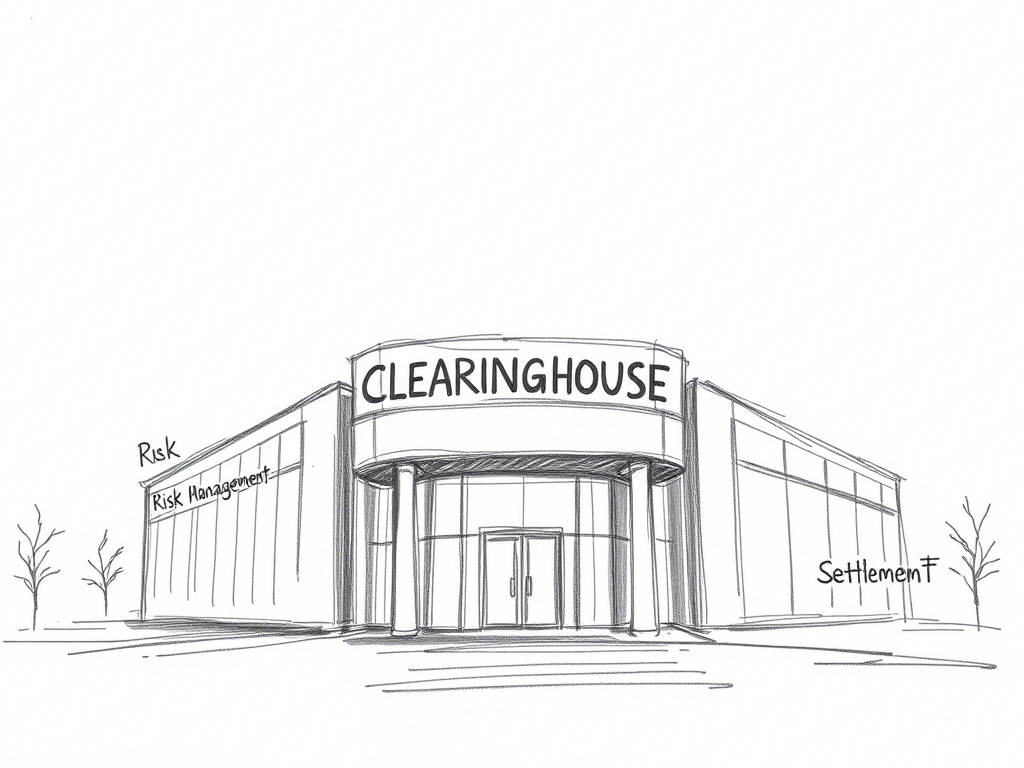
In the complex and intricate world of financial markets, clearinghouses serve as the quiet protectors that ensure trades are completed fairly and reliably. By stepping in as middlemen, clearinghouses reduce the risk of one party not following through on a deal.
They also create uniform processes for settling trades and help maintain stability in financial systems around the world. Their role has become essential to keeping these markets functioning effectively and securely.
What Is A Clearinghouse?
A clearinghouse plays a very important role in financial markets. Its main job is to make sure trades are completed properly and safely. When two parties agree to a trade, the clearinghouse steps in to handle all the details that need to be finalized. This includes things like confirming the trade, settling accounts, collecting money from both sides (called margin payments), making sure the assets are delivered to the correct person, and keeping track of all the trading information.
Clearinghouses act as a middleman in trades involving futures and options contracts. They do this by becoming the buyer for every seller and the seller for every buyer. For example, if you sell something, the clearinghouse becomes your buyer. If you buy something, it becomes your seller. This way, the clearinghouse ensures that everyone involved gets what they agreed to.
The clearinghouse comes into play after a trade has been made between a buyer and a seller. Once the trade happens, the clearinghouse takes over to complete all the necessary steps to make the transaction official. By doing this, it helps ensure the trade is valid and trustworthy. Acting as a middleman provides an extra layer of security and makes the process more efficient, which is essential for maintaining stability in the financial markets.
To work efficiently, the clearinghouse takes the opposite side of every trade. For instance, if someone buys a contract, the clearinghouse acts as the seller, and vice versa. This approach simplifies the process and reduces the cost and risk of dealing with multiple parties at once. However, because the clearinghouse is involved in every trade, it faces the possibility that either the buyer or the seller might fail to meet their obligations (this is called default risk).
To reduce this risk, clearinghouses require traders to put up collateral, known as margin payments. These margin requirements act as a safety net, ensuring that even if one party defaults, the clearinghouse can still fulfill its responsibilities and keep the market running smoothly.
Types Of Clearinghouses
Clearinghouses play a pivotal role in the financial markets by ensuring the smooth execution of trades, managing risks, and reducing the likelihood of defaults. They are especially critical for derivatives, which encompass a wide array of financial instruments such as futures, options, swaps, and forwards. By addressing the complexities inherent in these products, clearing houses foster a safer and more efficient trading environment for all participants.
Below is an overview of the major types of clearing houses:
Central Counterparty (CCP) Clearinghouses
A Central Counterparty (CCP) acts as the intermediary between two parties in a trade, guaranteeing the performance of both sides. This significantly reduces counterparty risk, the risk that one party may fail to meet its obligations.
Examples:
- CME Clearing: Operated by the Chicago Mercantile Exchange, it clears derivatives like commodity futures, interest rate futures, and equity index futures.
- LCH Clearnet: A global CCP that clears derivatives such as credit default swaps (CDS) and interest rate swaps (IRS).
Securities Clearinghouses
These clearinghouses facilitate the settlement of securities transactions, ensuring that when you buy stocks, bonds, or other securities, the shares are delivered to the buyer, and the payment reaches the seller seamlessly. Their primary goal is to minimize post-trade risks and ensure efficiency.
Example:
DTCC (Depository Trust & Clearing Corporation): Clears transactions in U.S. securities markets.
Futures Clearinghouses
Futures clearinghouses serve as reliable intermediaries in futures trading, ensuring that both parties fulfill their contractual obligations. They manage margin requirements, monitor risks, and resolve disputes. By guaranteeing contract fulfillment even in the event of a default, they streamline processes like margin calls and trade reconciliation.
Examples:
- Eurex Clearing: Based in Europe, it clears futures and options contracts, including equity index futures and fixed-income futures.
- ICE Clear (Intercontinental Exchange): Specializes in clearing futures contracts, particularly in energy and commodities.
Swaps Clearinghouses
Clearinghouses for swaps act as intermediaries to ensure the performance of swap contracts, mitigating counterparty risk in these often customized agreements. They typically focus on interest rates, credit default swaps (CDS), and currency swaps.
Examples:
- ICE Clear Credit: Clears credit default swaps (CDS) and other derivatives.
- CME ClearPort: Provides clearing services for over-the-counter (OTC) derivatives, including energy and commodity swaps.
Foreign Exchange (Forex) Clearinghouses
These clearinghouses oversee foreign exchange transactions, ensuring they are executed according to agreed terms. By enhancing the efficiency and reliability of the forex market, they contribute to the integrity of financial dealings and build trust among participants.
Examples:
- CLS Group (Continuous Linked Settlement): Uses a payment-versus-payment (PvP) model to ensure simultaneous settlement of both sides of a transaction.
- LCH ForexClear: Clears a wide range of OTC foreign exchange derivatives.
Commodity Clearinghouses
Specializing in commodities trading, these clearinghouses handle goods such as oil, metals, and agricultural products. They guarantee transactions and manage associated risks, facilitating seamless settlement.
Examples:
- ICE Clear for Commodities: Clears futures and options contracts in the energy and agricultural sectors.
- LME Clear (London Metal Exchange): This company specializes in clearing futures, options, and forward contracts on base metals.
- Eurex Clearing: Also handles some commodity-related contracts, though it is better known for equity and fixed-income derivatives.
Over-the-Counter (OTC) Clearinghouses
OTC derivatives are privately negotiated contracts rather than being traded on exchanges. OTC clearing houses standardize these customized contracts (e.g., interest rate swaps, credit default swaps) and reduce counterparty risk by acting as intermediaries.
Examples:
- LCH Clearnet (SwapClear): Clears a significant portion of the global OTC interest rate swap market.
- ICE Clear Credit: Focuses on clearing credit default swaps (CDS) and other OTC derivatives.
Learn More: How Instant Settlement Could Transform Markets

What Are The Benefits Of Clearinghouses?
Ensuring Stability In Financial Markets
One of the biggest advantages of clearinghouses is their ability to create stability across different types of financial markets. They achieve this by ensuring that trades are completed smoothly and without complications.
When a trade happens, the clearinghouse steps in to guarantee that both parties receive what they are owed. This provides everyone involved with confidence, knowing that their transactions will be handled fairly and reliably. By reducing uncertainty, clearinghouses contribute to a more secure and dependable trading environment.
Promoting Fairness And Liquidity
Clearinghouses also play a critical role in maintaining fairness in the trading process. They ensure that all participants in a trade follow the rules and procedures set by the exchange. By enforcing these standards, clearinghouses help maintain order and transparency in the market.
This sense of fairness encourages more people to participate in trading activities, which in turn boosts liquidity. Liquidity is essential because it allows buyers and sellers to trade quickly and at fair prices, making the market more efficient for everyone.
Facilitating Physical Delivery In Trades
In some cases, trades involve physical delivery, especially in options and futures contracts. Clearinghouses take responsibility for ensuring that the correct goods are delivered on time and according to the terms specified in the contract.
This process begins after the trade has been agreed upon but before the scheduled delivery date. By overseeing this step, clearinghouses ensure that the physical aspect of the trade is carried out accurately.
Preventing Disputes And Building Trust
By ensuring that physical deliveries and other trade obligations are fulfilled correctly, clearinghouses help prevent disputes between buyers and sellers. They make sure that everyone involved in the trade meets their responsibilities exactly as outlined in the original agreement.
This reduces the chances of disagreements or problems arising later on. The reliability also provided by clearinghouses builds trust among market participants. When traders know that their transactions will be handled properly, it creates a smoother and more predictable trading experience for everyone.
Clearinghouses In Different Markets
Clearinghouses adapt their operational frameworksto address the unique risks and transactional requirements of distinct asset classes. These institutions provide tailored solutions that ensure market integrity while accommodating sector-specific challenges.
Equities Markets
In equities trading, clearinghouses like the National Securities Clearing Corporation (NSCC) streamline post-trade processes by netting offsetting positions and guaranteeing settlement. The NSCC’s Continuous Net Settlement (CNS) system aggregates daily trades, reducing the volume of securities and payments that need to be exchanged by up to 98%.
For instance, if Broker A sells 10,000 shares of Company X to Broker B and simultaneously buys 8,000 shares from Broker C, the NSCC nets these transactions into a single obligation for Broker A to deliver 2,000 shares.
This netting mechanism minimizes liquidity demands and operational friction, enabling same-day settlement cycles (T+1) for U.S. equities. The Depository Trust Company (DTC), a subsidiary of the Depository Trust & Clearing Corporation (DTCC), further safeguards the process by immobilizing physical certificates and maintaining electronic records of ownership.
Fixed-Income Securities
The Fixed Income Clearing Corporation (FICC), a DTCC subsidiary, operates two specialized divisions for government and mortgage-backed securities (MBS). The Government Securities Division (GSD) clears U.S. Treasury bonds, notes, and bills, processing over $1.8 trillion daily through its Real-Time Trade Matching system.
Meanwhile, the Mortgage-Backed Securities Division (MBSD) automates the confirmation and risk management of agency MBS trades, utilizing a platform that standardizes coupon rates and settlement dates across $500 billion in daily transactions. By acting as a central counterparty, the FICC ensures that even complex fixed-income trades settle seamlessly, mitigating risks associated with price volatility and counterparty default.
Derivatives Markets
Derivatives clearinghouses such as CME Group Clearing and LCH.Clearnet novates over-the-counter (OTC) and exchange-traded contracts, replacing bilateral agreements with standardized obligations. For interest rate swaps, LCH.Clearnet’s SwapClear service maintains a $1.2 trillion margin pool to cover potential defaults, allowing it to manage $1 quadrillion in notional derivatives exposure.
Futures markets rely on daily mark-to-market margining, where clearinghouses like the Options Clearing Corporation (OCC) adjust collateral requirements based on intraday price movements.
During the 2020 oil price collapse, CME Clearing enforced $9.8 billion in variation margin calls within 24 hours, preventing cascading defaults among energy traders. Post-2008 reforms under Dodd-Frank mandated central clearing for 75% of standardized OTC derivatives, shifting risk from opaque bilateral contracts to regulated clearinghouses.
Digital Assets
Emerging platforms like ClearToken are redefining clearing for blockchain-based assets by integrating decentralized settlement with centralized risk management. ClearToken’s proof-of-concept in 2023 demonstrated atomic settlement - simultaneous transfer of digital tokens and payment - on a permissioned blockchain, reducing counterparty risk in crypto trades.
Unlike traditional markets, digital asset clearing operates 24/7, requiring real-time collateral monitoring and AI-driven liquidity pools to manage volatility. By aligning with frameworks like the UK’s Digital Securities Sandbox, ClearToken aims to bridge regulatory gaps while enabling institutional participation in tokenized securities.
Cross-Border Transactions
Global clearinghouses such as Euroclear and Clearstream harmonize settlement across jurisdictions by converting foreign currencies and complying with local regulations. Euroclear settles €30 trillion annually in international bonds, leveraging its “bridge” network to link central securities depositories (CSDs) in 40 countries.
For example, a Japanese investor purchasing German government bonds through Euroclear benefits from automated tax reclaims and currency conversions, eliminating the need for multiple intermediaries. These systems rely on ISO 20022 messaging standards to synchronize settlement instructions across time zones, reducing failed trades from 5% to under 0.1% in partnered markets.

Challenges Faced By Clearinghouses
Risk Of System-Wide Problems
Clearinghouses play a central role in financial markets by handling many trades. However, this important role also makes them a potential source of risk.
If a major clearinghouse were to fail, because of too many defaults or technical problems, it could cause a chain reaction, leading to serious problems for the entire financial system. Even with strict rules and strong risk management in place, the possibility of such a failure remains a big worry.
High Costs Of Running A Clearinghouse
Operating a clearinghouse is expensive. These organizations need advanced technology, must follow strict regulations, and have to maintain large funds to cover possible defaults.
These costs are passed on to members through fees, such as charges for transactions and memberships. Smaller players in the market often find these fees hard to afford, which can prevent them from participating in cleared markets and create barriers for new entrants.
Pressure To Follow Rules
Clearinghouses are under constant watch by regulators to ensure they keep financial markets stable. They must comply with complicated rules that vary across different regions and are always changing.
Keeping up with these requirements takes a lot of time, money, and effort. If a clearinghouse fails to meet these standards, it could face fines or lose its reputation, adding extra pressure to operate perfectly while adapting to new regulations.
Managing Extreme Market Volatility
When markets become very volatile, clearinghouses face greater risks. For example, more participants may fail to meet their obligations, leading to a rise in margin calls (requests for additional funds).
Clearinghouses must ensure they have enough liquidity to handle these situations and avoid losses. Extreme events, like those during the 2008 financial crisis, push clearinghouses to their limits and require careful planning and testing to stay stable.
Technological Vulnerabilities
Clearinghouses depend heavily on technology to process trades, manage risks, and settle transactions. But this reliance on tech also makes them vulnerable. Cyberattacks, system crashes, or technical failures can disrupt operations and damage trust.
To protect themselves, clearinghouses must invest in top-notch cybersecurity and reliable systems. However, this adds to their operational challenges and increases costs.
Frequently Asked Questions
How Do Clearinghouses Make Money?
A clearing house also auctions products, matching the highest bidding price to the lowest bidding price. Clearing houses earn money from the fees their members pay them for each transaction.
Why Do We Need A Clearinghouse?
Clearing houses are essential for the smooth operation of financial markets, serving as intermediaries between buyers and sellers.
What Are Clearinghouse Funds?
Clearing house funds are monies that pass from one bank to another through the clearing process of the Federal Reserve System.
What Is The Difference Between Clearing Bank And Clearing House?
This process reduces the number of transactions that need to be settled and, consequently, the amount of money and securities that need to be transferred. Banks, on the other hand, typically settle each transaction individually. Clearing houses manage risk by requiring members to post collateral or margin deposits.
What Is A Disadvantage Of Using A Clearinghouse?
One of the main disadvantages is the cost, as clearinghouses may charge fees for each transaction or a monthly subscription fee. The use of a clearinghouse also adds an extra step in the billing process, which may lead to delays or errors if not managed properly.
Conclusion
Clearinghouses play a vital but often overlooked role in financial markets. They take the many individual promises made between buyers and sellers, which can be messy and disorganized, and turn them into strong, reliable commitments that everyone can count on.
As financial markets continue to change and grow with new technologies like blockchain and artificial intelligence, clearinghouses will also keep evolving. Even though most people don’t notice them, clearinghouses are always working behind the scenes to keep the financial system running smoothly.
Don't Miss: Settlement Cycles Explained
Latest Articles
Popular Articles