How To Make Money Online With Google AdSense In 2025
Maximize your income with Google AdSense. Discover proven strategies, advanced optimization tactics, and unique insights from 10+ years of expertise.
Jun 30, 202514.6K Shares474K Views
Google AdSenseis one of the most accessible ways to monetize a website or YouTube channel. But to truly succeed, it takes more than just placing ads on a page-it requires understanding your audience, building high-quality content, optimizing traffic, and constantly improving your strategy. After more than ten years in the ever-changing world of digital publishing, I’ve learned what works, what doesn’t, and how to avoid common mistakes.
This guide breaks it all down, sharing practical tips to help you not only get started but also boost your earnings and build a sustainable online business. From getting approved for AdSense to mastering advanced optimization strategies, I’ll walk you through how to turn clicks into steady income.
1. Understanding Google AdSense
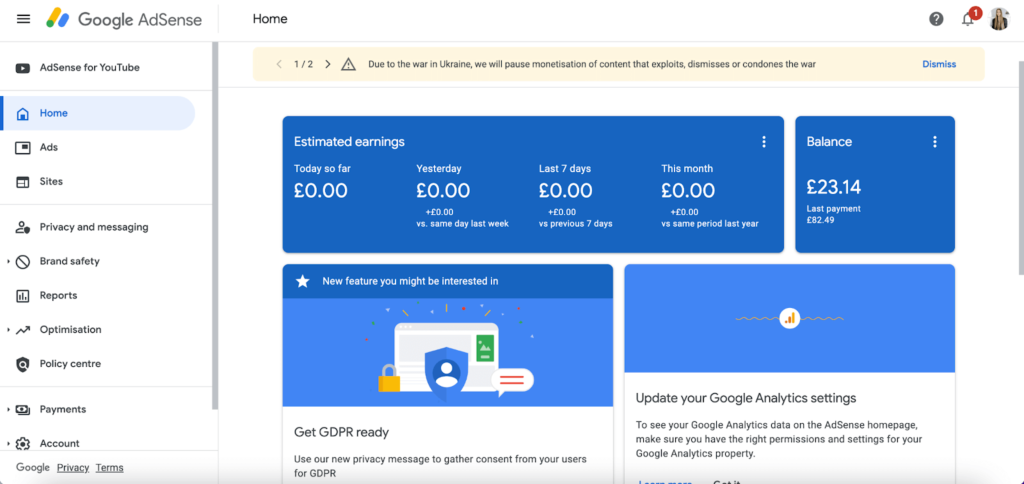
Google AdSense acts as a bridge, connecting advertisers with publishers (website owners) looking to monetize their content. When you sign up for AdSense, Google's automated system places ads on your site that are relevant to your content and your visitors' interests. You earn money primarily through two models:
- Cost-Per-Click (CPC):You get paid each time a user clicks on an ad displayed on your site. This is the most common model.
- Cost-Per-Impression (CPM):You earn a small amount for every 1,000 times an ad is displayed (impressions), regardless of clicks. This is more common for high-traffic sites.
The beauty of AdSense lies in its simplicity for publishers. Google handles the advertiser relationships, billing, and ad delivery, allowing you to focus on what you do best: creating compelling content.
Why Advertisers Benefit From Google AdSense
Understanding the advertiser's side can help you optimize your content. Advertisers use Google AdSense (via Google Ads) because:
- Cost-Effective:They primarily pay when someone clicks on their ad (for CPC campaigns), making it performance-based.
- Massive Reach:Their ads can appear on over 2 million websites across the Google Display Network (GDN), reaching a huge audience.
- Targeting:They can target users based on interests, demographics, and behavior, ensuring their ads reach relevant potential customers.
- Diverse Formats:Advertisers have a range of ad formats to choose from to best match their message and goals.
2. Navigating The Google AdSense Approval Process
Before you can earn a single cent, your website needs to be approved by Google AdSense. This isn't a rubber-stamp process; Google has strict guidelines to ensure a high-quality ad ecosystem.
Essential Requirements For AdSense Approval
- Original, High-Quality Content:Your site must offer unique, valuable, and engaging content that provides a good user experience. Thin content, scraped content, or articles lacking depth are common reasons for rejection. Focus on becoming a go-to resource in your niche.
- Sufficient Content:While there's no official "minimum" number of articles, a site with a decent volume of well-written posts demonstrates authority and commitment. Aim for at least 20-30 high-quality articles before applying.
- Compliance with AdSense Program Policies:This is non-negotiable. Familiarize yourself with all AdSense policies, including content restrictions (no adult, violent, or illegal content), traffic source guidelines, and ad placement rules.
- Age Requirement:You must be at least 18 years old. If you're younger, a parent or guardian can apply on your behalf.
- Website Ownership:You must have access to your site's HTML source code to place the AdSense verification code.
- Good User Experience & Navigation:Your site should be easy to navigate, with clear menus and a logical structure. A responsive design that works well on all devices is also crucial.
- Privacy Policy:A clear and comprehensive privacy policy detailing how user data is collected and used is mandatory. This also includes information about AdSense and cookies.
Check out this video:
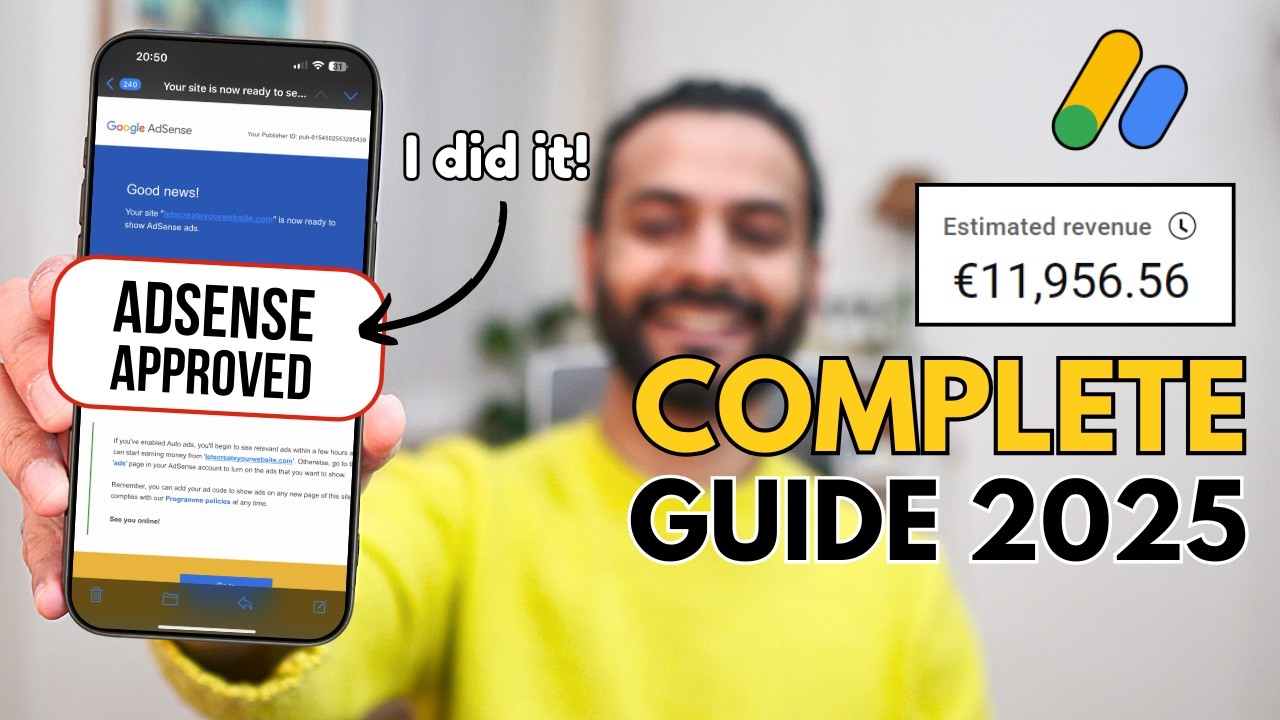
10 MUST-KNOW Tips Before Applying for Google AdSense in 2025!
How To Apply For AdSense?
1. Start with Your Google Account:You'll need an active Google account (like a Gmail address) to begin. Head to the official AdSense sign-up pageand click "Get started" to log in.
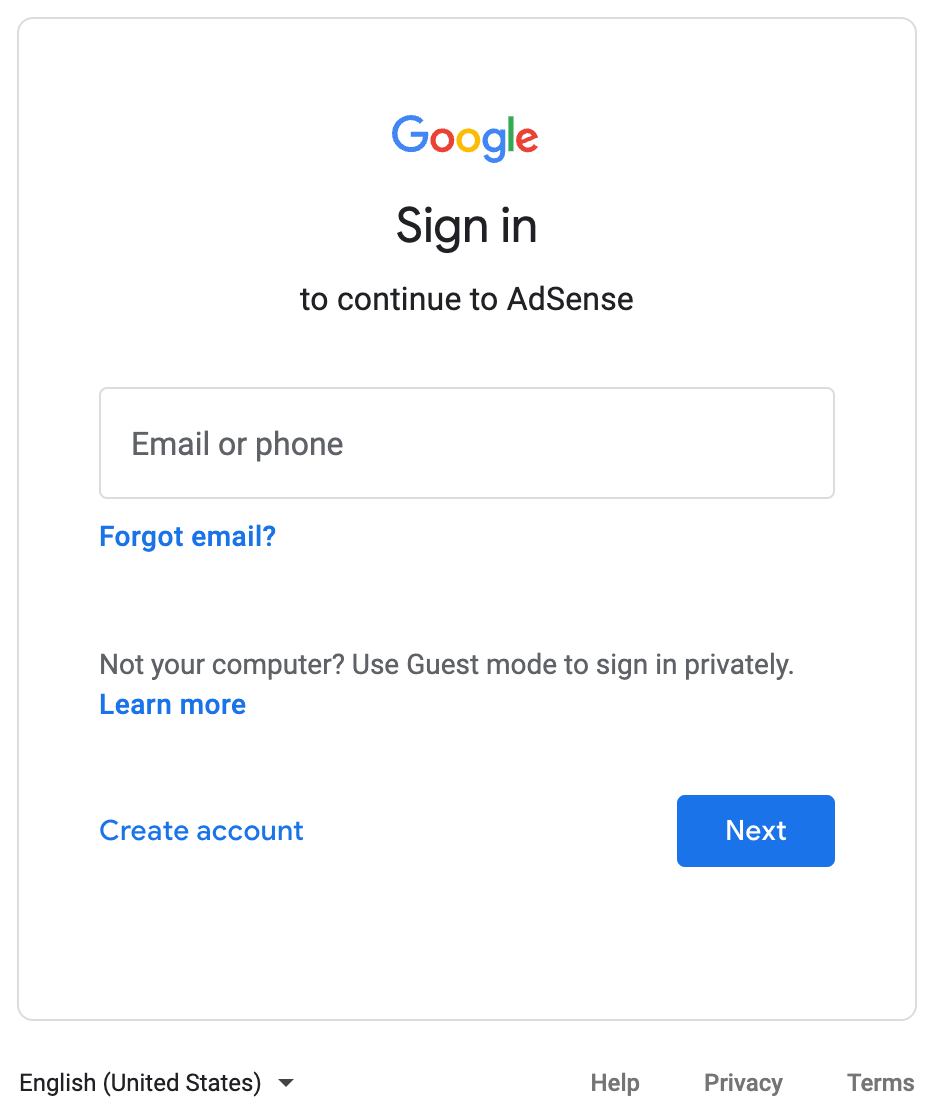
2. Provide Website & Payment Details:Once logged in, you'll be prompted to enter your website's URL. While AdSense allows you to create an account without an immediate website, it's highly recommended to apply once your content-rich site is ready to go.
You'll also need to input your payment information to set up your profile. Remember, you can manage multiple websites under a single AdSense account.
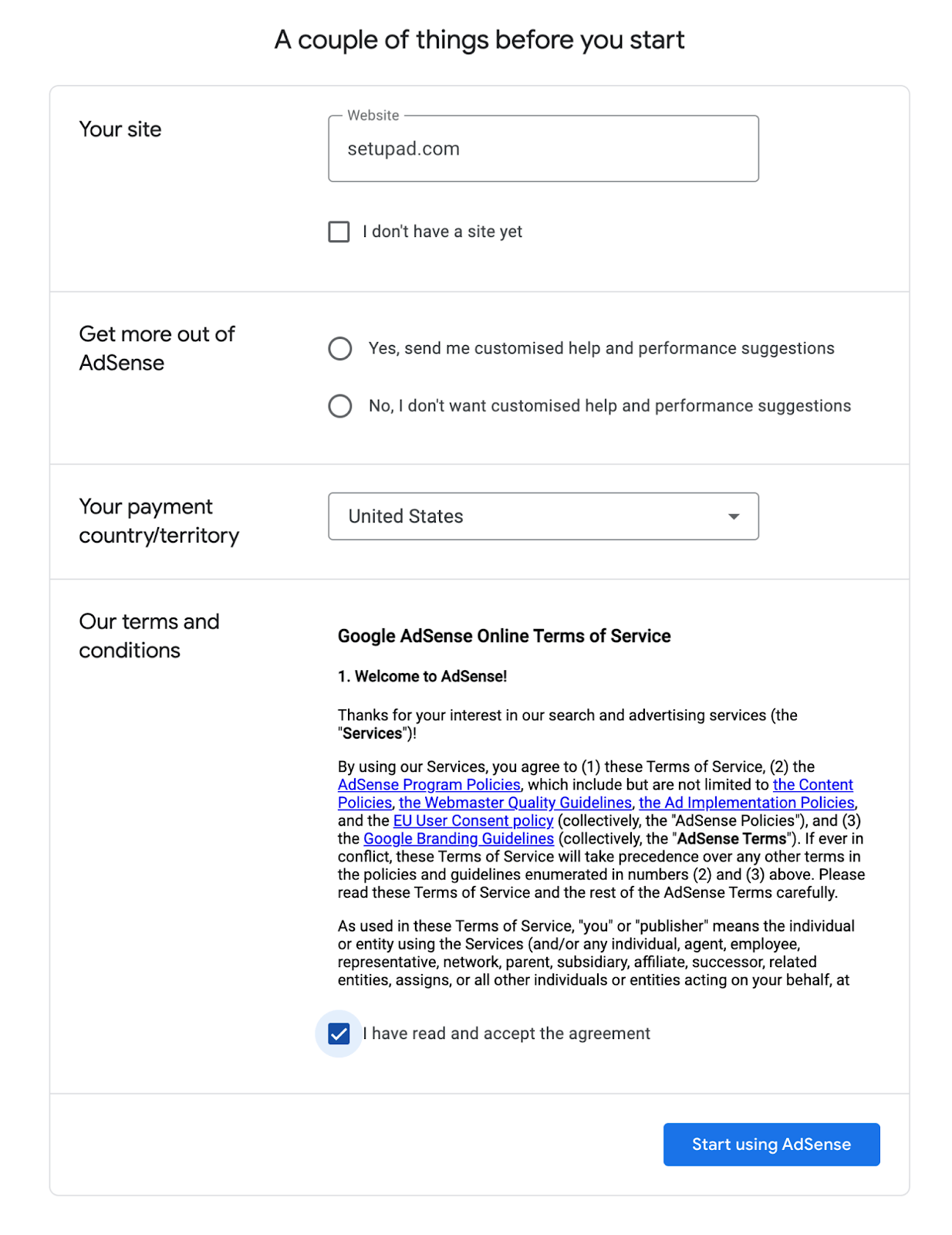
Lastly, complete your payment details, configure your ad settings, and link your website to AdSense. You can also monetize multiple sites under one account.
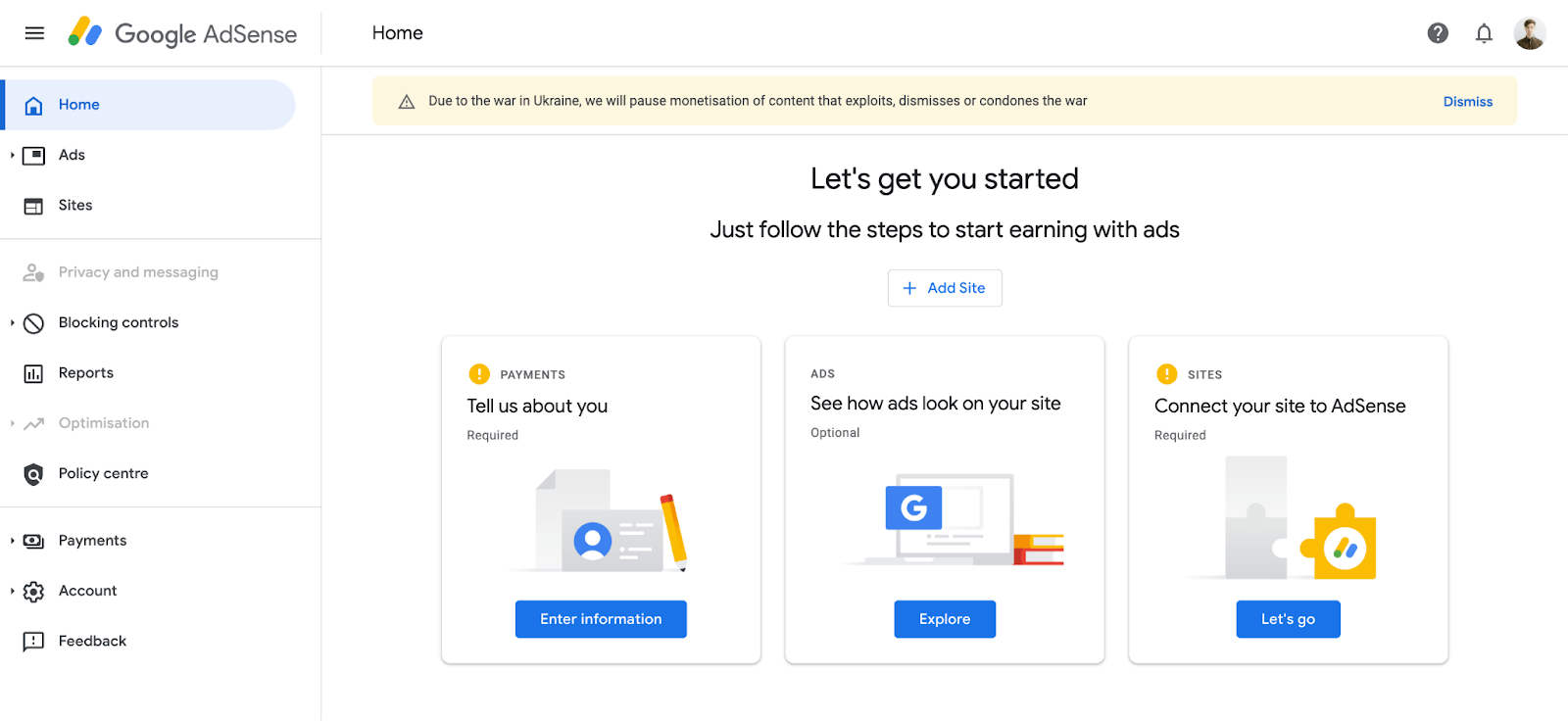
3. Connect Your Site with Code:AdSense will then provide you with a unique snippet of code. You'll need to insert this code into the <head>section of your website. Don't worry if you're not a coding expert; AdSense provides clear, step-by-step instructions to guide you through this crucial part.
4. Await Review & Approval:After the code is successfully placed, the AdSense team will review your website. They'll check for policy compliance, content quality, and overall suitability. If everything aligns with their requirements, your site will be approved, and you'll be ready to start monetizing your traffic!
5. Start Optimizing:Once approved, you can begin exploring various ad placements and formats. If you're unsure where to start, Google's Auto Ads feature is a great way to let machine learning optimize ad delivery for you.
How Long Does It Take To Get AdSense Approved?
Getting approved for AdSense typically involves two stages, and the timeframes can vary:
Initial Verification (Application Review):After you submit your application and add the AdSense code to your site, Google verifies your ownership and initial eligibility. This usually takes 24-48 hours, but can sometimes extend up to a week. During this stage, Google is ensuring your site is ready for the program.
Full Site Review & Ad Serving:Once verified, Google performs a more in-depth review of your entire site's content and traffic to determine suitability for ads. This process can take anywhere from a few hours to a few daysafter you've placed the ad code.
You'll start seeing live ads once this second stage is complete. If it takes longer than two weeks without a clear answer, you might consider contacting AdSense support.
3. Optimizing Your Website For Maximum AdSense Earnings
Once approved, the real work begins. Maximizing your AdSense revenue involves a blend of strategic content creation, technical optimization, and continuous testing.
1. High-Quality, Engaging Content Is King
This is the cornerstone of all success with AdSense. More than just words, "high-quality content" implies:
- Solving User Problems:What questions are your readers asking? What challenges can you help them overcome?
- In-Depth & Comprehensive:Don't just scratch the surface. Provide thorough, well-researched information that establishes your authority.
- Unique Value Proposition:What makes your content stand out? Do you offer a fresh perspective, original research, or unique insights?
- Readability & Engagement:Use clear language, short paragraphs, subheadings, bullet points, and relevant images/videos to keep readers engaged. Longer dwell times and more page views directly correlate with higher ad impressions and clicks.
2. Drive Consistent, Targeted Traffic
More traffic means more ad impressions and clicks. However, not all traffic is equal. High-quality, engaged traffic from relevant sources will yield better results.
- Search Engine Optimization (SEO):This is paramount. Optimize your content with relevant keywords (including LSI keywords and Google Suggestions), build high-quality backlinks, improve site speed, and ensure mobile-friendliness. Appearing higher in search results brings organic, interested visitors.
- Social Media Promotion:Share your content on platforms where your target audience spends their time. Engage with your community and encourage sharing.
- Email Marketing:Build an email list to consistently bring returning visitors to your site. This is one of the most reliable traffic sources.
- Community Engagement:Participate in forums, online groups, and discussions relevant to your niche. Share your expertise and link back to your content when appropriate.
3. Strategic Ad Placement And Formats
Where and how you display ads significantly impacts earnings without compromising user experience.
- Above the Fold:Placing ads where they are immediately visible without scrolling often yields higher viewability and CTR.
- Within Content (In-Article Ads):Embedding ads naturally within your articles can be highly effective as users are already engaged with the content.
- Sidebar Ads:Traditional but still effective, especially for larger ad units.
- After Content:Placing ads at the end of a post can capture attention after a user has finished reading.
- Responsive Ad Units:These automatically adjust to fit various screen sizes and devices, ensuring optimal display on desktops, tablets, and mobile phones.
- AdSense Auto Ads:This feature uses machine learning to automatically place ads in optimal locations on your site. While it takes some control out of your hands, it can be a convenient way to maximize revenue for many publishers. Experiment with this feature.
Experiment with Different Ad Formats:Beyond display ads, consider:
- In-feed ads:Integrate seamlessly into feeds like articles lists.
- In-article ads:Optimized for placement between paragraphs.
- Multiplex ads:Show multiple ads in a grid, often resembling recommended content.
- Vignette ads:Full-screen ads that appear between page loads, offering high viewability.
- Anchor ads:Sticky ads that remain visible as the user scrolls.
4. Continuous Optimization And A/B Testing
AdSense isn't a "set it and forget it" system. Regular analysis and adjustments are key.
- Monitor Performance (Google Analytics & AdSense Reports):Link your Google Analytics to your AdSense account for deeper insights. Track metrics like page views, click-through rate (CTR), cost-per-click (CPC), and estimated earnings.
- A/B Testing:Experiment with different ad placements, ad unit sizes, and ad formats. Google AdSense's "Experiments" feature allows you to test variations and see which performs better.
- Block Low-Paying or Irrelevant Ads:Use the "Allow & block ads" feature in your AdSense account to prevent specific advertisers or categories from showing on your site if they are irrelevant or consistently yield low revenue.
- Improve Core Web Vitals:Google prioritizes page experience. Faster load times (Largest Contentful Paint), better interactivity (First Input Delay), and visual stability (Cumulative Layout Shift) contribute to a better user experience, which in turn can lead to higher ad engagement and rankings.
5. Implement Ads.txt
ads.txt(Authorized Digital Sellers) is an IAB initiative that lets you publicly declare authorized sellers of your digital ad inventory. This is crucial for preventing ad fraud and ensuring you get paid.
You can typically download this file directly from your Google AdSense account. Failing to implement or correctly configure ads.txtcan lead to significant revenue loss or delays in payment.
4. Common Reasons For AdSense Rejection
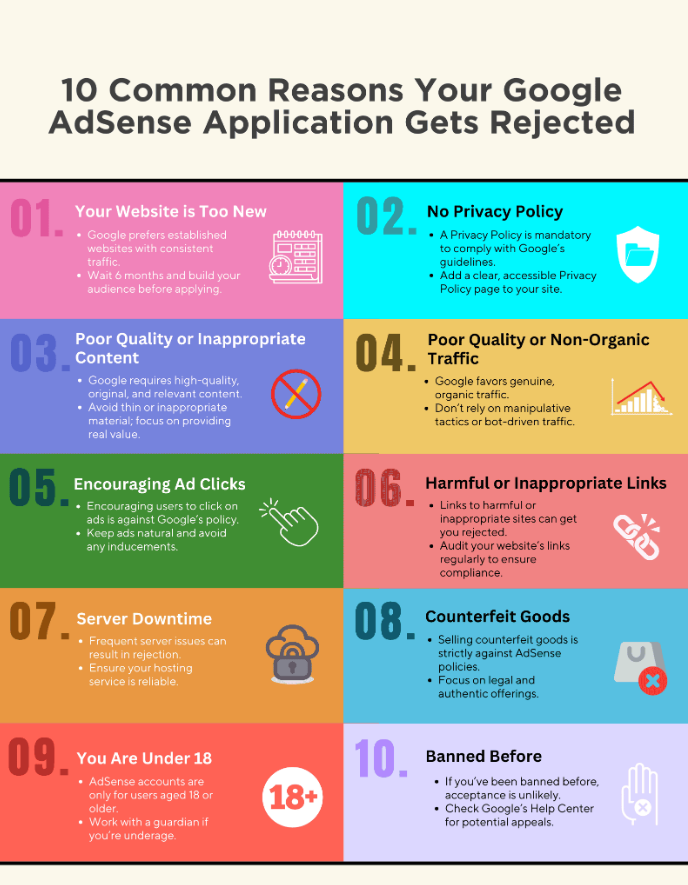
Many aspiring publishers get denied, and even approved accounts can face issues. Avoiding these common mistakes will save you time and potential heartache:
Common Reasons For Initial AdSense Rejection
- Insufficient Traffic:While not a direct policy, very low traffic can indicate a lack of audience, which means ads won't perform well.
- Poor Site Design/Navigation:A messy, confusing, or broken website provides a bad user experience, making it unsuitable for AdSense.
- Prohibited Content:Displaying ads on sites with illegal downloads, excessive violence, adult themes, or hate speech will lead to immediate rejection.
- Copyright Infringement:Using copyrighted material without permission is a quick way to get your application denied and potentially incur legal issues.
- Too Many Ads from Other Networks:Before AdSense approval, having excessive ads from other networks can signal a poor user experience.
Ongoing Mistakes To Avoid (Even After Approval)
- Clicking Your Own Ads:This is a severe violation and will lead to account termination. Never, under any circumstances, click on ads displayed on your own site.
- Asking Others to Click Ads:Similarly, encouraging friends, family, or online communities to click your ads is against policy. Intentional invalid clicks can lead to a "Google two-click penalty," significantly decreasing your revenue.
- Generating Invalid Traffic:Using bots, paid-to-click programs, or any artificial means to inflate traffic will be detected and punished. Google's systems are highly sophisticated at detecting and preventing invalid traffic, which can lead to account suspension or termination. Regularly check your Google Analytics for suspicious traffic patterns.
- Violating Content Policies:As mentioned, ensure all your content adheres strictly to AdSense guidelines. Regularly review your site for any policy compliance issues, especially if you have user-generated content. Using copyrighted, AI-generated, or scraped content can also trigger issues.
- Ignoring User Experience & Ad Density:Placing too many ads, using disruptive formats, or having a slow, clunky website will alienate your audience and ultimately harm your earnings. Ensure your ads never exceed your content (a common guideline is not more than 30% ads to 70% content).
- AdSense Ban Prevention:An AdSense ban can be permanent and often difficult, sometimes impossible, to appeal, especially if due to invalid traffic (which publishers sometimes have no control over). Always adhere to program policies, monitor traffic quality, and ensure proper ad code implementation.
- Not Diversifying Revenue Streams:While AdSense is a great start, relying solely on it can be risky. Consider exploring other monetization methods such as affiliate marketing (promoting relevant products or services), selling your own digital products (like e-books, courses, or templates), or securing sponsored content opportunities as additional income sources.
5. Maximizing AdSense Earnings: Advanced Strategies
Beyond the fundamentals, some advanced tactics can significantly boost your AdSense income.
Niche Selection And High CPC Keywords
The earning potential varies drastically by niche. Niches related to finance, insurance, technology, real estate, and legal services often have higher CPCs because advertisers in these industries pay more for clicks.
For example, in finance, articles detailing "How to Compare High-Yield Savings Accounts" or "Understanding ESG Investing" often attract premium advertisers.
In the tech sphere, "Review of the Latest AI Development Tools" or "Cybersecurity Best Practices for Small Businesses" can also draw high bids. Researching high CPC keywords using tools can guide your content strategy.
Create Evergreen Content
High-traffic, SEO-optimized topics like:
- “How-to” guides
- Reviews
- Listicles (e.g., “10 Best Free SEO Tools”)
- Resource roundups
User Experience And Ad Blocker Considerations
While ads are essential for revenue, intrusive ads can drive users away, leading to ad blocker adoption. Strive for a balance:
- Respectful Ad Density:Don't overload your pages with too many ads. Google's Better Ads Standards provide guidelines for acceptable ad experiences.
- Non-Intrusive Formats:Prioritize ad formats that blend naturally with your content and don't disrupt the user's flow.
- Ad Blocker Recovery:Some advanced solutions can gently encourage users with ad blockers to whitelist your site or offer a premium ad-free experience.
Leveraging Different Content Types
While text-based content is common, consider diversifying:
- Video Content (YouTube & AdSense for YouTube):If you create video content, YouTube's Partner Program, linked to AdSense for YouTube, can be a lucrative avenue.
- Gaming & Interactive Content:For sites with games or interactive elements, specific AdSense solutions might be available.
- AdSense Custom Search Ads:If your site has a substantial amount of content (e.g., a large blog, news archive, or forum), implementing AdSense Custom Search can provide a valuable user experience by allowing them to search your site's content, while also generating revenue by displaying ads alongside the search results. Note that this is distinct from Google Custom Search and requires a separate application.
Also Check Out: How To Make Money Blogging: 16 Proven Ways That Work In 2025
6. Make Money With AdSense On YouTube
Don’t just focus on blogs. If you love video content, AdSense can also monetize your YouTube channel:
Steps To Monetize YouTube With AdSense:
- Join the YouTube Partner Program
- Connect your channel to your AdSense account
- Enable monetization for eligible videos
- Choose ad types: skippable, bumper, overlay
Channels must have 1,000 subscribersand 4,000+ watch hoursin the past 12 months to qualify.
AdSense for YouTube Creators
Related Reading: How To Make Money On YouTube And Become A Sensation
7. Common Mistakes To Avoid
The path to AdSense success isn't without its pitfalls. Avoiding these common mistakes will save you time and potential heartache:
- Clicking Your Own Ads:This is a severe violation and will lead to account termination. Never, under any circumstances, click on ads displayed on your own site.
- Asking Others to Click Ads:Similarly, encouraging friends, family, or online communities to click your ads is against policy.
- Generating Invalid Traffic:Using bots, paid-to-click programs, or any artificial means to inflate traffic will be detected and punished.
- Violating Content Policies:As mentioned, ensure all your content adheres strictly to AdSense guidelines. Regularly review your site for any policy compliance issues, especially if you have user-generated content.
- Ignoring User Experience:Placing too many ads, using disruptive formats, or having a slow, clunky website will alienate your audience and ultimately harm your earnings.
- Not Diversifying Revenue Streams:While AdSense is a great start, relying solely on it can be risky. Consider exploring other monetization methods such as affiliate marketing (promoting relevant products or services), selling your own digital products (like e-books, courses, or templates), or securing sponsored content opportunities as additional income sources.
FAQs About Making Money Online With Google AdSense
How Do You Make Money Online With Google AdSense?
You make money with Google AdSense by displaying relevant advertisements on your website. When visitors view these ads (impressions) or click on them (clicks), you earn a portion of the revenue Google collects from the advertisers. Your earnings depend on factors like your traffic volume, niche, ad placement, and audience engagement.
How Much Does AdSense Pay Per 1,000 Views?
The earnings per 1,000 views, also known as RPM (Revenue Per Mille), vary significantly. It depends on your niche (high-paying niches like finance or tech generally yield higher RPMs), audience demographics, ad types, and ad quality. While there's no fixed rate, it can range from a few cents to several dollars or more per 1,000 views.
How Do I Make $100 Per Day With AdSense?
Earning $100 per day with AdSense requires significant traffic and a high-performing website. To achieve this, focus on:
- High-Quality Content:Consistently publish in-depth, valuable content that attracts and retains a large audience.
- SEO:Drive substantial organic traffic through effective keyword research, on-page optimization, and link building.
- Ad Optimization:Strategically place a mix of ad formats (display, in-article, auto ads) for optimal visibility and CTR.
- High CPC Niche:Consider targeting niches with higher advertiser competition and better-paying ads. It's a long-term goal that demands persistent effort and optimization.
How Do I Get My AdSense Money?
Google AdSense pays out monthly, typically between the 21st and 26th of the month. To receive payment, your finalized earnings must meet the minimum payment threshold, which is usually $100 USD. You can set up your preferred payment method in your AdSense account, such as direct bank transfer (EFT), wire transfer, or sometimes check, depending on your region.
Can I Log In To Google AdSense From Any Device?
Yes, you can access your Google AdSense account by going to the Google AdSense Login page and entering your Google account credentials from any web-enabled device (desktop, laptop, tablet, or smartphone).
What Are The Best Types Of Websites For AdSense?
Websites that naturally attract large, engaged audiences and have ample content work best. These include:
- Blogs:Content-rich sites focusing on specific niches.
- News Sites:Constantly updated with fresh content.
- Forums & Discussion Boards:Driven by user-generated content and high engagement.
- Niche Social Networks:If they grow to a significant size.
- Free Online Tools:Utilities that attract repeat users.
Should I Use Only One Type Of Ad Unit On My Site?
No, it's generally better to use different types of ad units (text, image, video, in-article, multiplex, vignette, anchor) to give advertisers more options and to see which formats resonate best with your audience. Always consider user experience and balance ads with content.
Can I Earn From Google AdSense On YouTube?
Absolutely! If you create video content, you can monetize your YouTube channel through the YouTube Partner Program, which links directly to your AdSense account. Once approved, you can enable monetization on individual videos and choose which ad types to display.
Conclusion
Making money online with Google AdSense is a testament to perseverance, strategic planning, and a deep understanding of your audience. It's not a get-rich-quick scheme, but rather a sustainable monetization model for those willing to invest in high-quality content and continuous optimization.
By prioritizing an exceptional user experience, diligently building targeted traffic through effective SEO and promotion, and thoughtfully placing and refining your ad units, you can transform your website into a powerful and consistent income generator.
The key lies in creating genuine value for your readers; when you achieve that, AdSense seamlessly becomes an extension of your efforts, rewarding your dedication. If this guide has illuminated your path, consider sharing it with others embarking on their own AdSense journey!
You Might Like: 13 Proven Tips On How To Make Money With Fiverr.com In 2025
Jump to
1. Understanding Google AdSense
2. Navigating The Google AdSense Approval Process
3. Optimizing Your Website For Maximum AdSense Earnings
4. Common Reasons For AdSense Rejection
5. Maximizing AdSense Earnings: Advanced Strategies
6. Make Money With AdSense On YouTube
7. Common Mistakes To Avoid
FAQs About Making Money Online With Google AdSense
Conclusion
Latest Articles
Popular Articles