Make Money With Transcription Work (Beginner’s Guide 2025)
Want to make money with transcription work from home? This in-depth article provides the best strategies, platforms, and expert advice to maximize your earnings and build a thriving career.
Jun 12, 20251.2K Shares110.6K Views

Imagine turning your sharp listening skills and attention to detail into a versatile income source, all from the comfort of your own space. Transcription work makes this possible. It’s more than just typing what you hear-it’s about precisely capturing spoken words, delivering a crucial service across various fields.
From legal proceedings and medical records to engaging podcasts and in-depth interviews, the need for skilled transcriptionists is on the rise. This isn’t just a side gig; it’s a legitimate path to a fulfilling, sustainable career.
Let us walk you through the transcription world, arming you with the insights and tools to start strong, excel, and maximize your earning potential.
1. What Exactly Is A Transcriptionist And Why Is It A Growing Opportunity?
At its core, what is a transcriptionist?They are meticulous listeners who convert audio and video recordings into accurate written documents, ensuring clarity and precision.
This involves more than simply typing quickly; it demands a strong grasp of grammar, spelling, and punctuation, coupled with exceptional attention to detail.
Some projects might even require capturing every utterance, including those filler words like "uh" and "um." The scope of work is vast. You might find yourself transcribing insightful podcasts, crucial business meetings, engaging classroom lectures, or even sensitive legal and medical discussions.
The rise of digital content, remote communication, and the increasing need for accessible information have fueled a significant demand for skilled transcriptionists, making it a promising avenue for those seeking flexible work arrangements.
2. Debunking Common Myths About Transcription Work
It's easy to fall prey to misconceptions. One common myth is that transcription is solely about fast typing. While speed is beneficial, accuracyreigns supreme. A flawlessly typed transcript riddled with errors is ultimately useless.
Another misconception is that the pay is inherently low. While entry-level positions might have modest rates, specialized fields and experienced transcriptionists can command significantly higher earnings.
Here, we will show you how to move beyond the basic level and tap into more lucrative opportunities.
3. The Different Flavors Of Transcription: General Vs. Specialized
Transcription isn't a one-size-fits-all career. It spans multiple niches, each with unique requirements and earning potential. General transcriptioncovers a broad range of content, including podcasts, meetings, interviews, and lectures. It’s often the entry point for beginners due to minimal barriers to entry.
On the other hand, specialized transcription-such as medicalor legal transcription-demands industry-specific knowledge, formal training, and sometimes certifications. These fields tend to pay more but require a deeper understanding of complex terminology and formatting standards.
For example, companies like Averbach Transcriptionand Cambridge Transcriptionsoften cater to clients in specialized industries, where accuracy and expertise are non-negotiable.
Understanding these different "flavors" helps you align your strengths with the right market and opens doors to higher-paying opportunities.
4. Essential Skills And Tools For Transcription Success
Foundational Skills You Absolutely Need
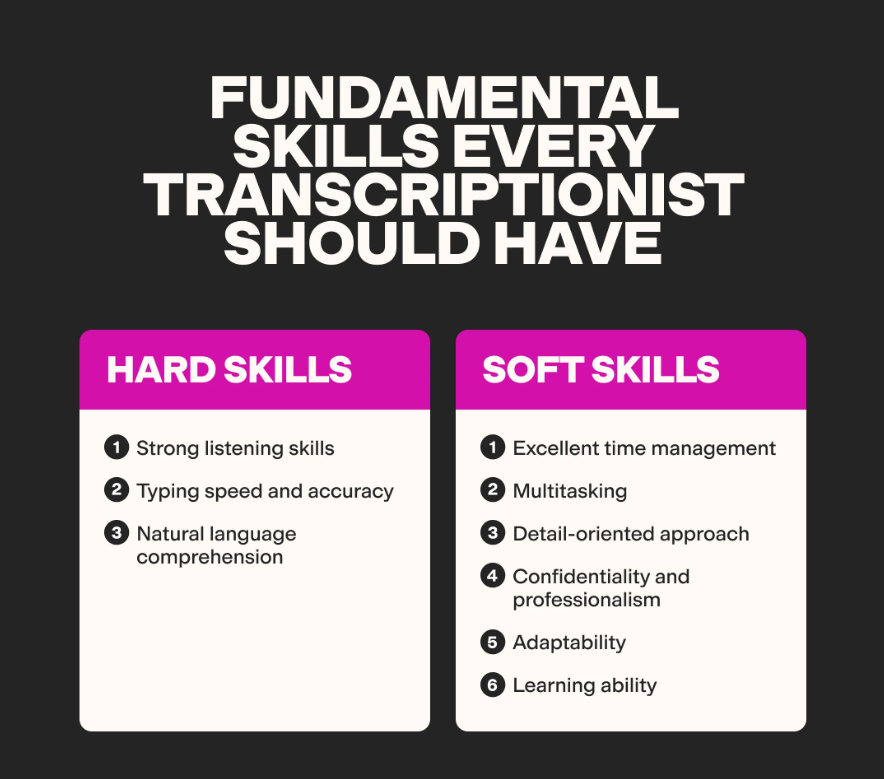
Before landing your first online transcription job, you need to master a core set of essential skills. These aren’t optional-they’re the baseline for success in this field:
- Fast and accurate typing- Speed matters, but accuracy is even more critical. Most companies require a typing speed of at least 60 words per minute.
- Excellent grammar, spelling, and punctuation- Clean, professional transcripts depend on your ability to write clearly and correctly.
- Strong listening skills- You’ll often deal with poor audio quality, background noise, or speakers with heavy accents. Sharp hearing and attention to detail are key.
- Computer literacy- Navigating transcription platforms, file formats, and editing tools efficiently is a must.
- Time management and focus- Transcription can be mentally draining. The ability to stay focused for long periods and meet strict deadlines is crucial.
These foundational skills form the backbone of a successful transcription career. Without them, even the best-paying jobs will be out of reach.
Leveling Up Your Skills: Advanced Techniques For Efficiency And Quality
Beyond the basics, mastering advanced techniques can significantly boost your efficiency and the quality of your work. This includes developing active listening strategiesto better comprehend context and anticipate what's being said.
The ability to understand different accents and speaking styles is invaluable. Effective time managementensures you can handle projects efficiently.
Furthermore, learning to utilize context clues and conduct quick research to clarify ambiguous terms can elevate the accuracy and professionalism of your transcripts.
Investing In Your Toolkit: Software, Hardware, And Helpful Resources
While it's possible to begin transcription with a basic setup, upgrading your tools can dramatically improve speed, accuracy, and productivity. Here’s what you’ll need:
- Word processing software- Programs like Microsoft Word or Google Docs are essential for formatting and delivering clean transcripts.
- Transcription software- Tools such as Express Scribe, oTranscribe, or Descript offer advanced features like variable playback speed, foot pedal support, and real-time time-stamping to streamline your workflow.
- High-quality headset- A noise-canceling, over-ear headset enhances audio clarity, especially when dealing with muffled recordings or multiple speakers.
- Foot pedal- For serious transcribers, a foot pedal allows hands-free control over playback, saving time and reducing fatigue.
- Reliable internet connection- Fast, stable internet is critical for uploading and downloading large audio files without interruption.
- Reference materials- Style guides, grammar handbooks, and industry-specific glossaries (legal, medical, or academic) ensure your transcripts meet client expectations.
Upgrading your toolkit isn’t just about comfort-it’s an investment in professionalism, efficiency, and higher earning potential.
The Role Of AI In Transcription: Friend Or Foe?
The rise of AI-powered transcription tools has sparked debate. While these tools can offer a quick first pass at transcribing audio, they often lack the nuance and accuracy of human transcriptionists, especially with complex audio or multiple speakers.
Instead of viewing AI as a replacement, consider it a potential aid. Ethically using AI for a first draft and then meticulously editing and proofreading can increase speed, but human oversight remains critical for producing high-quality, accurate transcripts.
Related Reading: 3 Top Ways To Make Money Online Fast In <year>
4. Finding Transcription Jobs: Where To Look And How To Stand Out

Finding the right transcription platform is essential to launching a successful freelance career. Some cater to total beginners, while others require experience or certification. Below is a breakdown of trusted platforms, including what makes each unique, who it's best for, and how to get started.
1. TranscribeMe
Overview: TranscribeMeis beginner-friendly and ideal for those just starting out. They offer short audio clips (2-4 minutes), allowing you to build stamina and experience gradually.
- Pay Rate:$15-$22 per audio hour; higher rates for specialized teams (e.g., medical).
- Pros:Flexible schedule, quick onboarding, frequent work.
- Cons:Low pay compared to industry averages; can be repetitive.
- Requirements:English proficiency, passing an entrance exam, and following the style guide.
- Payout:PayPal weekly.
Pro Tip:Join specialized teams (legal or medical) after gaining experience to increase earnings.
2. Rev
Overview: Rev is a well-established transcription platform that offers three roles: Transcriptionist, Captioner, and Subtitler. It's a competitive platform but can be lucrative once you build experience.
- Pay Rate:$0.30–$1.10 per audio minute depending on complexity.
- Pros:Wide range of transcription types (interviews, YouTube videos, legal).
- Cons:Lengthy application process; can be strict on quality.
- Requirements:Grammar test, transcription sample, U.S. or international availability.
- Payout:Weekly via PayPal.
Pro Tip:Maintain a high accuracy rating to access higher-paying jobs.
3. Scribie
Overview: Scribieoffers flexible freelance transcription work with a clear path for advancement. It's a great platform for those building speed and consistency.
- Pay Rate:$5–$25 per audio hour.
- Pros:Short files (under 10 minutes), optional bonus for accuracy, promotion to reviewer roles.
- Cons:Slower file availability, especially for new users.
- Requirements:Typing test, audio sample, understanding of U.S. English.
- Payout:PayPal; request anytime.
Pro Tip:Opt-in for the manual review process—it improves your editing skills and offers bonus earnings.
4. GoTranscript
Overview: Based in the UK but available globally, GoTranscriptis one of the most inclusive platforms for beginners. It has consistent work in general, business, and academic transcription.
- Pay Rate:$0.60 per audio minute (~$36 per audio hour).
- Pros:Clear guidelines, decent entry pay for beginners, global acceptance.
- Cons:File availability can vary; lengthy review process for submissions.
- Requirements:Grammar test, style adherence, basic transcription accuracy.
- Payout:Weekly via PayPal or Payoneer.
Pro Tip:Study their style guide carefully—it’s the key to passing the test and avoiding rejections.
5. Upwork
Overview: Upwork is not a dedicated transcription site but a massive freelance marketplace with higher pay potential. It's best suited for those who already have experience or a solid portfolio.
- Pay Rate:$15–$60+ per audio hour (varies by client).
- Pros:High-earning potential, direct client relationships, long-term contracts.
- Cons:High competition; 10% service fee; bidding process required.
- Requirements:Strong profile, client pitches, portfolio samples.
- Payout:Direct deposit, PayPal, Wise, Payoneer.
Pro Tip:Specialize in a niche (e.g., legal or podcast transcription) to stand out and charge premium rates.
Other Reliable Transcription Companies Worth Exploring
These platforms may offer fewer opportunities or have higher entry barriers but are respected in the industry:
6. CastingWords
- Pay varies by skill and rating; accepts U.S. and international freelancers.
- Offers a tier system that rewards quality work.
7. Speechpad
- Pays $0.25–$2.50 per audio minute.
- Requires an entrance test and style guide review.
8. Quicktate & IDictate
- Specialize in voicemail and legal/medical transcription.
- Lower pay ($0.0025–$0.005 per word), but consistent work.
9. CrowdSurf
- Transcription of short video/audio for the hearing-impaired.
- Requires MTurk account. Frequent tasks but lower rates.
10. Daily Transcription
- Higher pay ($0.75–$1.10 per audio minute).
- Requires native-level English and grammar test. U.S. & Canada only.
11. GMR Transcription
- Accepts beginners but prefers experience.
- Pay is $0.70–$1.25 per audio minute.
- Must commit to 4 hours of audio per month.
12. Transcription Hub
- Works with academic, business, and medical clients.
- Offers team-based collaboration for large projects.
13. Tigerfish
- One of the oldest transcription companies.
- Must download their software and pass a transcription test.
14. Way With Words
- Offers $0.45–$1.73 per audio minute.
- Focus on clear audio and deadlines.
- Accepts applicants from select countries.
15. Babbletype
- Pays weekly; expects native fluency and test completion.
- Workload can vary greatly week-to-week.
16. 3Play Media
- Higher pay, mostly for experienced captioners and transcriptionists.
- Involves a rigorous application process.
17. EScribers
- Specializes in legal transcription.
- Must have U.S. residency or work permit.
- Pay varies by court case and turnaround.
18. Ubiqus
- Offers transcription in medical, legal, and corporate fields.
- Typically hires from the U.S., Canada, and the UK.
19. SpeakWrite
- Focused on legal and law enforcement transcription.
- Requires 60 WPM typing and 1 year of experience.
20. Transcript Divas
- High pay for highly accurate and timely transcripts.
- U.S., UK, and New Zealand only.
Beyond Platforms: Direct Client Outreach And Networking
While platforms offer a steady stream of work, seeking direct clients can lead to higher pay rates and more consistent projects. Building a professional website or a strong LinkedIn profile showcasing your skills can attract potential clients.
Crafting compelling pitches tailored to specific client needs and leveraging professional networks can also open doors to direct opportunities.
Also Check Out: How To Make Money With Ptc Sites In <year>
5. Identifying High-Paying Niches And Specializations
Specializing in a transcription niche is one of the most effective ways to increase your income. While general transcription offers accessible entry points, high-paying sectors like legaland medical transcriptiondemand more expertise—and reward it accordingly.
Legal Transcription
Legal transcriptionists convert courtroom proceedings, depositions, and legal dictations into written documents. Due to the complex nature of legal terminology, this field requires:
- Strong understanding of legal language and formatting
- Fast, accurate typing under tight deadlines
- Adherence to confidentiality and legal procedures
Top Companies Hiring Legal Transcriptionists:
- eScribers:Specializes in court hearings, requires U.S. residency and legal background.
- Cambridge Transcriptions:Focuses on law firms, academic institutions, and government clients.
- VIQ Solutions (formerly Transcription Express):Offers court-related transcription, including police interviews and legal briefs.
Earning Potential:$1.00–$2.00+ per audio minuteRecommended Certification:Legal Transcription: Theory & Practice(offered by Transcribe Anywhere)
Medical Transcription
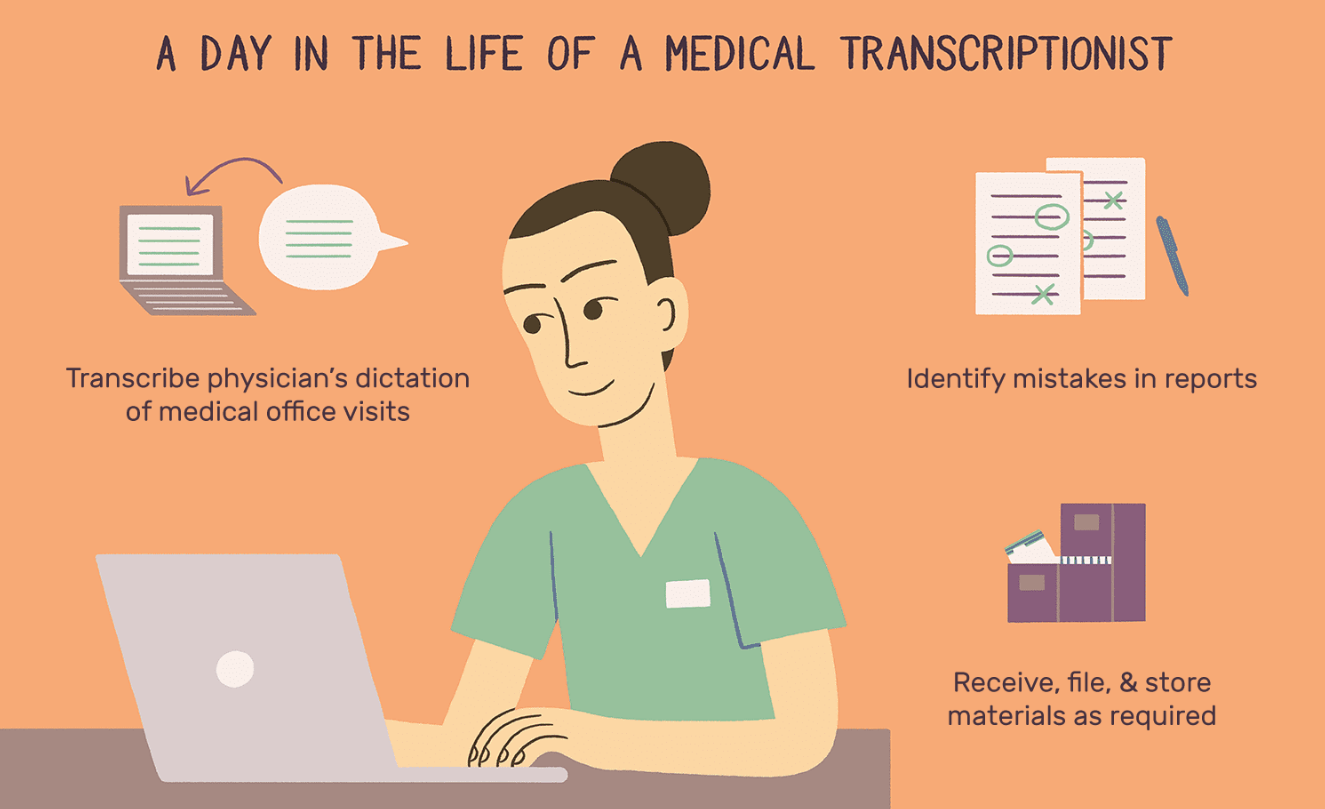
Medical transcription involves converting physician dictations and patient records into structured documentation used in health records, insurance, and patient care. The role requires:
- Familiarity with medical terminology, anatomy, and pharmacology
- Ability to understand heavily accented or fast-paced speech
- Attention to accuracy due to legal and patient safety concerns
Top Companies Hiring Medical Transcriptionists:
- Averbach Transcription:Known for working with hospitals and private practices
- Ubiqus:Offers medical and pharmaceutical transcription services
- Athreon:Specializes in healthcare, requiring HIPAA compliance
Earning Potential:$0.08–$0.15 per line or $1.25–$3.00 per audio minuteRecommended Certification:Certified Healthcare Documentation Specialist (CHDS)by AHDI
Other High-Income Transcription Niches
Besides legal and medical, consider these specialized sectors:
- Academic Transcription- Lectures, dissertations, and research interviews (Clients: universities, think tanks)
- Financial Transcription- Earnings calls, investor reports, market commentary (Clients: banks, finance firms)
- Corporate/Business Transcription- Meeting minutes, webinars, internal training (Clients: Fortune 500 companies)
Why These Pay More:
- Require familiarity with technical vocabulary
- Often demand tighter turnarounds
- Clients typically have bigger budgets and recurring needs
6. Crafting A Winning Application And Portfolio
When applying for transcription jobs, especially as a beginner, a strong application is key. Be prepared to showcase your skills, even if you lack direct experience.
Many companies, as noted in the source, may ask for a sample transcription or require you to complete a test. Creating practice transcripts in different styles and highlighting any transferable skills from previous experiences can strengthen your application.

7. Mastering The Art Of Efficient And Accurate Transcription
Developing Effective Workflow Strategies
Efficiency and accuracy go hand-in-hand. Establishing a comfortable and organized workspace is crucial. Developing effective time management techniques, including setting realistic goals and breaking down long recordings into smaller segments, can prevent burnout.
Learning to handle difficult audio, such as recordings with background noise or multiple speakers, through techniques like repeated listening and utilizing noise-canceling headphones, is essential.
The Importance Of Style Guides And Formatting
Adhering to specific style guides and formatting requirements is paramount for delivering professional transcripts.
Clients may have their own guidelines, or they might refer to common style guides like AP or Chicago. Paying close attention to these details ensures consistency and meets client expectations.
Quality Control: Proofreading And Editing Techniques
Even the most skilled transcriptionists make errors. Implementing a rigorous quality control process is vital. This includes thorough proofreading and editing techniques.
Reading the transcript aloud while listening to the audio can help identify discrepancies. Utilizing spell-check and grammar tools is helpful, but human review is indispensable for catching contextual errors.
Handling Challenging Audio: Strategies For Clarity
Dealing with poor audio quality is an inevitable part of transcription work. Strategies include actively listening multiple times, using noise-canceling headphones, adjusting playback speed, and utilizing any available context to decipher unclear speech.
Sometimes, it might be necessary to politely ask the client for clarification on particularly inaudible sections.
8. Maximizing Your Earnings And Building A Sustainable Career
Understanding Payment Models And Rates
Transcriptionists are typically paid based on different models: per audio minute, per hour, or per project. The rates can vary significantly based on the complexity of the audio, turnaround time, and the transcriber's experience and specialization.
Researching industry standards and understanding how different platforms and clients structure their payments is crucial for setting realistic earning expectations.
Setting Your Rates And Knowing Your Worth
As you gain experience and develop specialized skills, it's important to understand your market value and set your rates accordingly. Consider the time and effort involved in producing accurate transcripts, your level of expertise, and the rates offered by comparable professionals. Don't be afraid to negotiate, especially when working with direct clients.
Diversifying Your Income Streams
To build a more sustainable career, consider diversifying your income streams within the transcription field. This could involve offering additional services like editing or proofreading, or expanding into different transcription specializations.
Building Long-Term Client Relationships
Cultivating strong relationships with clients can lead to consistent work and higher earning potential. This involves clear communication, reliability in meeting deadlines (as emphasized in the source), and consistently exceeding expectations with the quality of your work.
The Importance Of Continuous Learning And Professional Development
The transcription field is constantly evolving. Staying updated with industry trends, improving your skills through online courses or workshops, and considering relevant certifications can enhance your marketability and open doors to higher-paying opportunities.
9. Avoiding Common Pitfalls And Scams In Transcription Work
Recognizing Red Flags: Warning Signs Of Low-Paying Or Unreliable Opportunities
Be wary of opportunities that seem too good to be true or require you to pay a fee to get started. Legitimate transcription companies, as the source points out, earn money from their clients and should not charge you an application fee (though a small fee for a background check for sensitive information roles might be an exception).
Protecting Yourself: Best Practices For Online Safety And Payment Security
Protect your personal and financial information when working online. Use secure payment methods and be cautious of sharing sensitive details with unverified clients or platforms.
Managing Taxes And Finances As A Freelance Transcriptionist
As a freelance transcriptionist, you are responsible for managing your own taxes and finances. Understanding your tax obligations and keeping accurate records of your income and expenses is crucial for a smooth financial experience.
10. Fun Facts About Transcription
Transcription isn’t just a modern gig-it has a fascinating past and some quirky facts that highlight its evolution. Here are some surprising insights:
1. Transcription Dates Back To Ancient Egypt
During the reign of the Pharaohs, transcriptionists were known as scribes. These individuals played a vital role in royal courts and religious life. They were so valued that they were often exempt from taxes and physical labor—a privilege not extended to most of the population.
2. The Word “Transcription” Has Deep Roots
The word transcriptionwas first used in the modern English language in 1598by Joh Florio in his Italian-English dictionary. Since then, it has evolved from handwritten scrolls to digital files.
3. The First Typists Were Mostly Women
By 1910, around 81% of the typing workforceconsisted of women. Typewriters were marketed to resemble sewing machines, making them more familiar and socially acceptable for women to operate at the time.
4. Transcriptionist Vs. Transcriber: Not The Same
A transcriptionistrefers to a person who listens to audio or video and types out the spoken content. A transcriber, in technical terms, can also refer to a machine or softwarethat performs automated transcription.
5. Typing Speed Has Changed Over Time
In 1998, typing 40 words per minute (WPM)was considered fast. Today, that’s about average. Skilled transcriptionists now often exceed 70–90 WPMto meet client demands efficiently.
6. We Speak Much Faster Than We Type
The average person speaks 150 to 170 words per minute, which is nearly 4x faster than most people type. This speed difference is why it can take up to 5–6 hours to transcribe just one hour of audio, depending on complexity.
11. The Future Of Transcription: Adapting And Thriving In An Evolving Industry

The Impact Of Technological Advancements On Transcription
While AI transcription is advancing, it's unlikely to completely replace human transcribers anytime soon. The nuances of human speech, including tone, emotion, and context, often require human interpretation for accurate transcription.
How Human Transcribers Can Offer Unique Value Beyond Automation
Human transcribers bring critical thinking, contextual understanding, and the ability to interpret complex audio in ways that AI currently cannot. This unique value proposition ensures that skilled human transcriptionists will remain in demand.
Emerging Trends And Opportunities In The Transcription Field
The increasing demand for accessibility and the growth of multimedia content are likely to create new opportunities within the transcription field. Staying adaptable and open to learning new skills will be key to thriving in this evolving landscape.
You Mighe Like: How To Make Money On YouTube And Become A Sensation
FAQs About Transcription Work
Can You Really Make Money Doing Transcription?
Absolutely. While earnings vary based on experience, specialization, and the platforms or clients you work with, transcription offers a legitimate way to earn money online. Many individuals build successful part-time or full-time careers in this field.
How Can I Transcribe And Get Paid?
The process typically involves applying to transcription platforms or directly to clients, passing any required tests or submitting samples, completing transcription tasks, and receiving payment through methods like PayPal or direct deposit.
How Much Do Transcribers Get Paid?
Pay rates vary widely, from a few dollars per audio hour for beginners on some platforms to $0.75 or more per audio minute for experienced or specialized transcriptionists. Your earning potential increases with skill, accuracy, and specialization.
Do I Need Any Prior Experience To Start As A Transcriptionist?
Many companies hire beginners with no prior experience, provided they possess the necessary skills (typing, grammar, listening). You might be required to pass an assessment test. However, specialized roles often require certifications or prior experience.
What Kind Of Equipment Do I Need For Transcription Work?
The essentials include a computer with high-speed internet and word processing software. Investing in transcription software, a quality headset, and a foot pedal can significantly improve efficiency.
Which Online Transcription Job For Beginners Are Recommended?
Platforms like TranscribeMe and Scribie are often mentioned as beginner-friendly, offering training and opportunities to gain initial experience.
A Quick Recap
Making money with transcription work presents a viable and increasingly attractive opportunity in today's flexible work landscape. It demands a unique blend of skills, precision, and dedication.
By understanding the nuances of the industry, investing in the right tools and skills, and strategically navigating the job market, you can move beyond simply transcribing and truly unlock your earning potential.
Remember to focus on accuracy, continuously learn and adapt, and build strong professional relationships. With the right approach, a rewarding and sustainable career in the world of transcription is well within your reach.
If you found this guide helpful, consider sharing it with others who might be interested in exploring transcription work!
Jump to
1. What Exactly Is A Transcriptionist And Why Is It A Growing Opportunity?
2. Debunking Common Myths About Transcription Work
3. The Different Flavors Of Transcription: General Vs. Specialized
4. Essential Skills And Tools For Transcription Success
4. Finding Transcription Jobs: Where To Look And How To Stand Out
5. Identifying High-Paying Niches And Specializations
6. Crafting A Winning Application And Portfolio
7. Mastering The Art Of Efficient And Accurate Transcription
8. Maximizing Your Earnings And Building A Sustainable Career
9. Avoiding Common Pitfalls And Scams In Transcription Work
10. Fun Facts About Transcription
11. The Future Of Transcription: Adapting And Thriving In An Evolving Industry
FAQs About Transcription Work
A Quick Recap
Latest Articles
Popular Articles