Tesla - A Value Investor's Perspective On The 2024 Results
With a $650+ billion market cap, Tesla is priced like a high-growth technology company, yet the numbers tell a different story.
Author:Michael J. HarringtonFeb 27, 202546.6K Shares790.7K Views
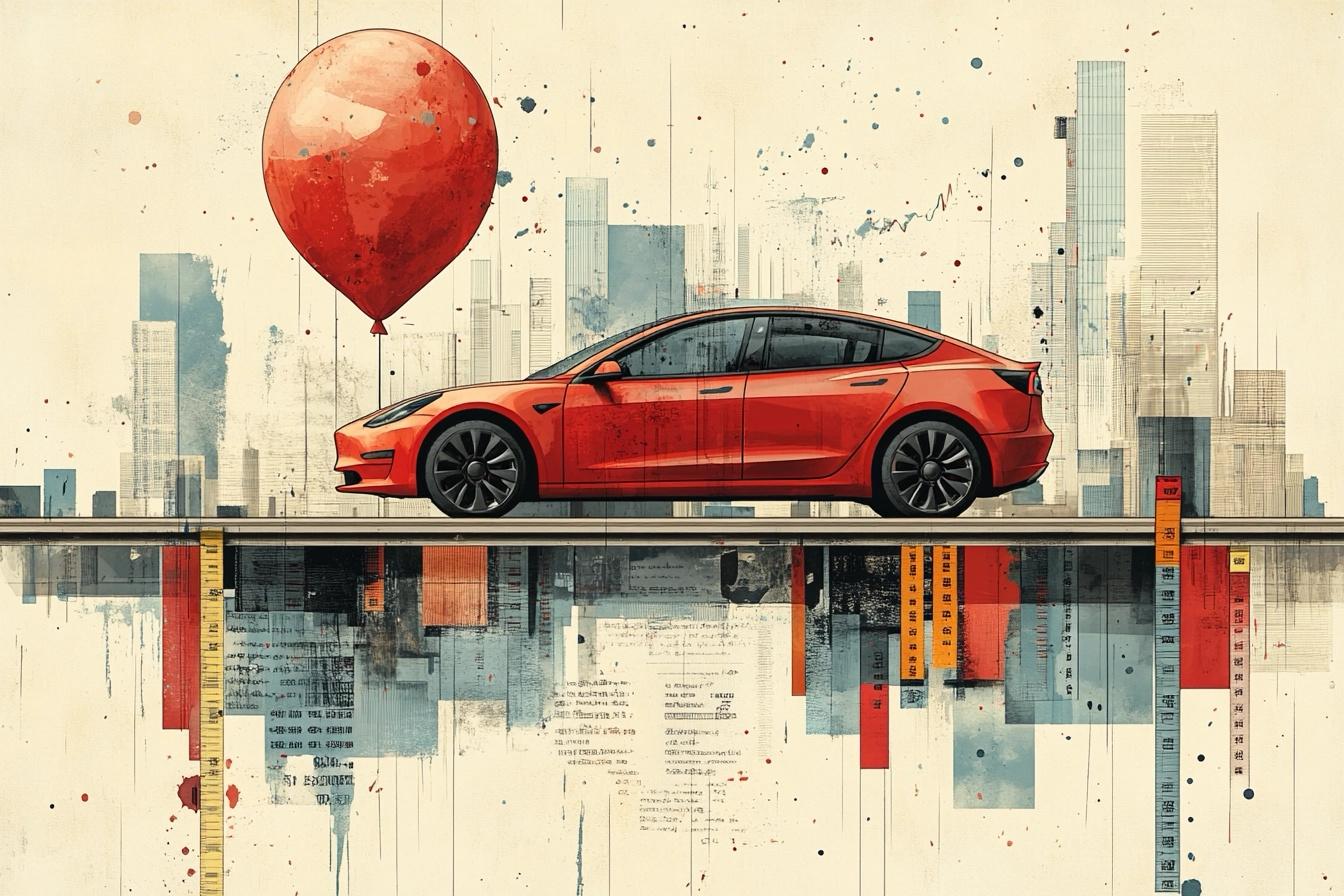
After spending considerable time analyzing Tesla's Q4 and FY 2024 financial report, I feel compelled to share my perspective as someone who's followed markets for over two decades through multiple cycles. Here's my unvarnished assessment:
The Fundamental Disconnect
Tesla's 2024 results reveal a company at a crossroads. With a $650+ billion market cap, Tesla is priced like a high-growth technology company, yet the numbers tell a different story:
- Core automotive business revenue declined 6% year-over-year
- Vehicle deliveries decreased 1%
- Operating margins compressed to 7.2% (from 9.2% in 2023)
- Net income dropped 53% year-over-year to $7.1B
As a value investor, I find it impossible to justify the current valuation based on these fundamentals. Tesla trades at approximately 91x trailing earnings while showing deteriorating performance in its main business line.
Where's The Moat?
Legacy automakers have caught up significantly in EV production. Tesla's once-insurmountable lead in battery technology and EV manufacturing is narrowing. The company has responded with price cuts, which has protected market share but at the cost of profitability.
The Q4 report repeatedly emphasizes that Tesla's future hinges on:
- Full Self-Driving (FSD) technology reaching "human levels of safety"
- Launching a Robotaxi business "later this year in parts of the U.S."
- Growing the energy storage business
The energy business shows genuine promise with 67% YoY revenue growth, but at $10.1B, it's still just 10% of total revenue.
The Narrative Vs. The Numbers
I'm particularly concerned by statements in the "Outlook" section. Tesla has revised its strategy for affordable vehicles, now planning to use "aspects of the next generation platform as well as aspects of our current platforms." Translation: the revolutionary manufacturing innovations promised for years are being scaled back.
The report states this approach will result in "less cost reduction than previously expected." This is a significant admission that undermines the growth narrative.
Meanwhile, Q4's net income was boosted by a $600M mark-to-market gain on digital assets – essentially cryptocurrency profits unrelated to operational performance.
My Investment Thesis
As a value investor, I look for three key elements:
- Strong fundamentals
- Reasonable valuation
- Margin of safety
Tesla fails on all three counts. The company faces:
- Intensifying competition in its core business
- Declining margins and automotive revenue
- Dependency on still-unproven autonomous technology
- Manufacturing capacity utilization issues
- A valuation that prices in flawless execution
The current share price requires perfect execution on autonomous driving, substantial energy business growth, and successful new vehicle launches. Any stumbles could trigger significant downside.
Bottom Line
If you own Tesla, you're not investing in what the company is today – you're betting on what it might become. That's speculation, not investment.
I have no position in Tesla and wouldn't consider one until either:
- The company demonstrates sustainable profitability growth in its core business, or
- The valuation adjusts to reflect current fundamentals rather than speculative future technologies
In my 25 years of investing, I've learned that betting on promises of revolutionary technology rarely ends well for shareholders who pay premium prices. I'll stick to companies where the numbers justify the valuation, not where the valuation requires a technological revolution to make sense.

Michael J. Harrington
Author
Michael Harrington is a private wealth manager and investment strategist with over 30 years of experience in the financial markets. After earning his economics degree and MBA from prestigious East Coast universities, he built his career analyzing undervalued companies across various sectors.
Known for his contrarian perspective, Harrington developed his investment philosophy during the market turbulence of the late 1990s, when he correctly cautioned clients about tech stock overvaluations before the dot-com crash. His value-oriented approach emphasizes fundamental business analysis, competitive positioning, and management quality over technical indicators or market momentum.
Throughout his career, Harrington has managed portfolios for high-net-worth individuals and family offices, maintaining a deliberately low profile while delivering consistent long-term returns. He's known within investment circles for his skepticism toward hype-driven narratives and his insistence on sustainable business models over growth projections.
Though he doesn't seek media attention, Harrington occasionally shares his market insights through investment forums and private client newsletters. His reputation for candid analysis has earned him respect among value-oriented investors who appreciate his willingness to challenge conventional market wisdom.
When not analyzing financial statements, Harrington enjoys restoring classic American cars and tending to his small cattle operation in the Midwest, where he applies the same patient, long-term thinking that characterizes his investment approach. Despite market cycles that increasingly favor momentum over value, he remains committed to time-tested investment principles while adapting to evolving market conditions.
Latest Articles
Popular Articles