What Is Loan-to-Value Ratio? Your Guide To Smarter Mortgage Decisions
Loan-to-value ratio (LTV) measures how much you're borrowing compared to a property's value. Find out how it affects loan approval and interest rates.
Jul 07, 202547.3K Shares1.1M Views

Loan to Value Ratio (LVR) plays a crucial role in the mortgage and lending industry. Whether you're a first-time homebuyer, an investor, or looking to refinance, understanding LVR can significantly impact your borrowing power, interest rates, and overall financial decisions.
LVR determines how much a lender is willing to finance based on a property's value. A lower LVR often means better loan terms, while a higher LVR can lead to additional costs like Lenders' Mortgage Insurance (LMI). Knowing how to calculate and improve your LVR can help you secure better mortgage deals and reduce financial risks.
1. What Is The Loan-To-Value (LTV) Ratio?
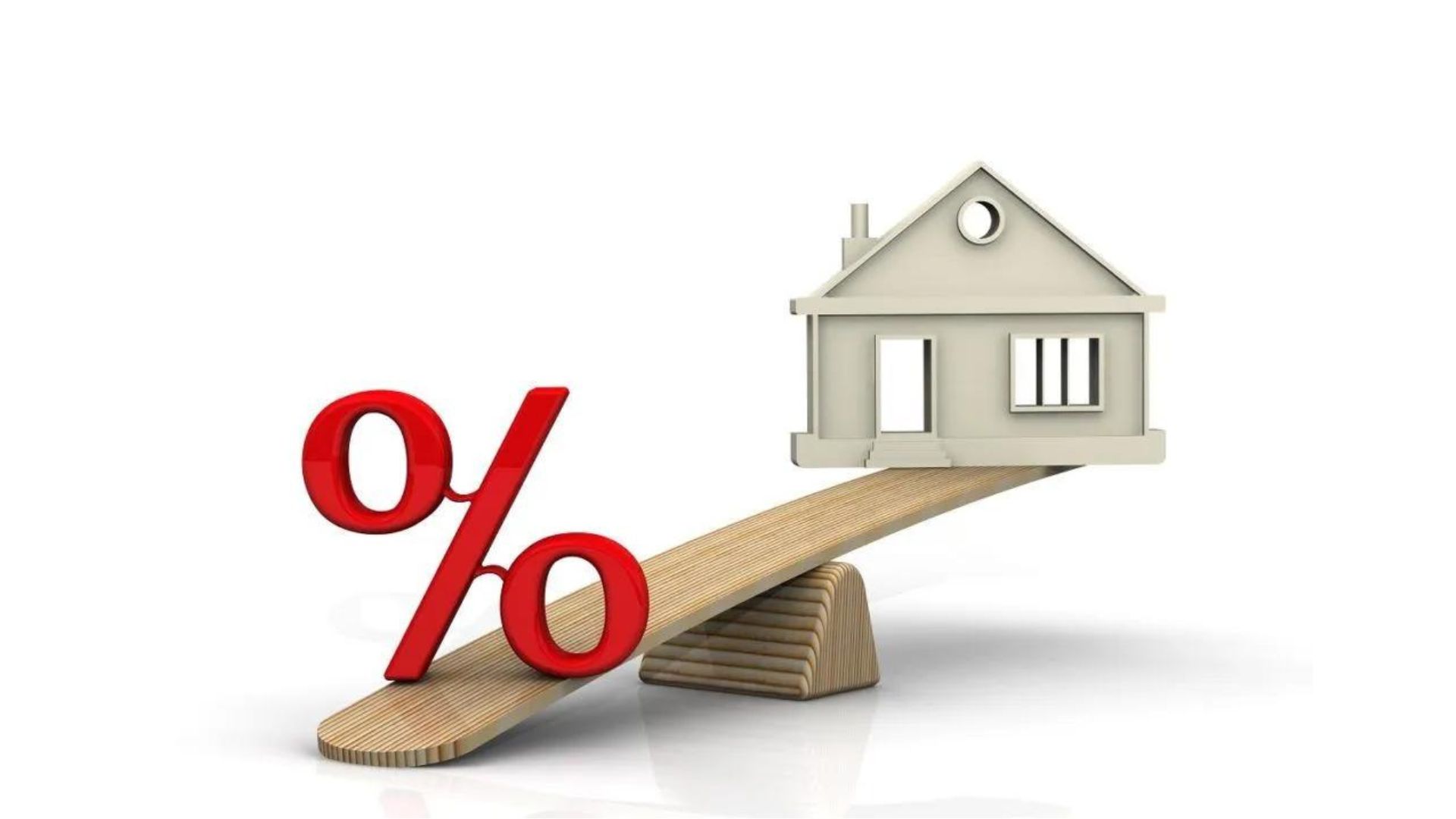
Loan-to-Value (LTV) ratio measures the percentage of a property's value that is financed through a loan. Lenders use this metric to assess risk when determining loan eligibility and interest rates.
Formula For LTV
LTV (%) = (Loan Amount ÷ Property Value) × 100
Example Calculation
- Home Purchase:If a home is valued at $400,000 and the borrower secures a loan of $320,000, the LTV ratio is: (320,000 ÷ 400,000) × 100 = 80%
- Existing Mortgage:If a homeowner has $150,000 remaining on their mortgage and their property is now valued at $300,000, the LTV is: (150,000 ÷ 300,000) × 100 = 50%
Key Components And Valuation Considerations
Two critical elements determine LTV calculation:
- Loan Amount: The principal sum borrowed from the lender
- Property Value: Typically determined through professional appraisal
It's crucial to understand that lenders rely on the appraised value rather than purchase price when calculating LTV. If a home is purchased for $500,000 but appraised at only $480,000, the lender will base the LTV calculation on the lower appraised value1.
Interactive LTV Calculator
To determine your own LTV ratio quickly, use this simple calculation approach:
- Identify your loan amount (or remaining balance)
- Determine your property's current appraised value
- Divide loan amount by property value
- Multiply the result by 100 to get your percentage
For example:
- Property Value: $300,000
- Loan Amount: $240,000
- LTV Ratio: ($240,000 ÷ $300,000) × 100 = 80%
2. Why LTV Matters: Significance For Lenders And Borrowers
The LTV ratio serves as a critical risk assessment tool that affects multiple aspects of the lending process, influencing decisions that impact both financial institutions and property buyers.
Lender Perspective: Risk Management
Lenders use LTV as a primary metric to evaluate lending risk. A higher LTV indicates greater risk since the borrower has less equity invested in the property, which may affect their commitment to maintaining payments during financial hardship1.
The relationship between LTV and lending terms is inverse:
- Lower LTV (≤ 80%): Facilitates easier loan approval and lower interest rates
- Higher LTV (> 80%): Triggers stricter lending criteria and higher interest rates
This relationship exists because the lender's security position improves with lower LTV ratios. In case of default, the lender can recover costs by selling the property, and a lower LTV means they have a better chance of recovering the full loan amount even if property values decline1.
Borrower Benefits: Financial Advantages
Understanding your LTV ratio empowers you to make informed financial decisions that can result in significant savings. Benefits include:
- Better Loan Terms: Lower LTV ratios typically qualify for better interest rates and loan conditions
- Reduced Insurance Costs: Avoiding PMI/LMI can save thousands over the loan term
- Enhanced Equity Position: Greater equity provides financial security and potential leverage
- Reduced Financial Risk: Lower LTV ratios decrease vulnerability to market downturns
- Improved Negotiating Position: When refinancing or seeking new loans1
The 80% LTV Threshold: A Critical Benchmark
The 80% LTV mark represents a significant threshold in mortgage lending:
| LTV Range | Typical Requirements |
| ≤ 80% | No mortgage insurance, better rates |
| > 80% | PMI/LMI required, higher rates |
| > 95% | Limited lender options, highest rates |
This threshold exists because loans with LTV ratios above 80% statistically carry higher default risk, prompting lenders to require additional protection through mortgage insurance1.
3. Types Of Mortgage Insurance And Their Relationship To LTV
When LTV exceeds specific thresholds, lenders typically require insurance to mitigate their risk. Understanding these insurance types is essential for evaluating the true cost of high-LTV loans.
Private Mortgage Insurance (PMI)
PMI applies to conventional loans in the United States when the LTV exceeds 80%. This insurance protects the lender, not the borrower, in case of default. Key facts about PMI:
- Typically costs 0.5% to 1% of the loan amount annually
- Can be removed once LTV reaches 78% through principal reduction
- Borrowers can request PMI removal at 80% LTV if payment history is good
- May be structured as monthly, annual, or upfront premium1
Lenders Mortgage Insurance (LMI)
LMI is the Australian equivalent of PMI, required when LTV exceeds 80%. Important considerations include:
- One-time premium typically added to the loan amount
- Cannot be canceled when LTV decreases (unlike PMI)
- Premium varies based on loan amount, LTV ratio, and property type
- First-time homebuyer programs may subsidize LMI costs1
Mortgage Insurance Premium (MIP)
MIP applies specifically to FHA loans regardless of LTV. Notable differences from PMI include:
- Required for the life of the loan if the initial LTV exceeds 90%
- Can be removed after 11 years if the initial down payment was ≥10%
- Includes both upfront premium (1.75% of loan) and annual premium (0.45-1.05%)
4. Calculating LTV: Methods And Common Mistakes
Calculating your LTVratio is straightforward. Simply divide the loan amount by the property's appraised value or purchase price (whichever is lower) and multiply by 100.
Standard Calculation Process
The standard LTV calculation divides the loan amount by the property's value (usually the lower of purchase price or appraised value) and multiplies by 1001. For example:
For a new purchase:
- Property Value: $300,000
- Loan Amount: $240,000
- LTV Ratio: ($240,000 ÷ $300,000) × 100 = 80%
For an existing mortgage:
- Remaining Mortgage Balance: $150,000
- Current Home Value: $250,000
- LTV Ratio: ($150,000 ÷ $250,000) × 100 = 60%
Common Calculation Errors
Several mistakes can lead to inaccurate LTV assessments:
- Using Purchase Price Instead of Appraised Value: Lenders use the lower of the two values, which can increase the actual LTV if the appraisal comes in below the purchase price.
- Ignoring Additional Financing: Secondary loans like HELOCs should be included in CLTV calculations, not basic LTV.
- Failing to Account for Market Changes: Property values fluctuate, affecting LTV for existing mortgages.
- Overlooking Closing Costs Rolled Into Loan: If closing costs are financed, they increase the loan amount and thus the LTV ratio.
5. LTV In Different Loan Programs
Various loan programs have distinct LTV requirements and limitations that borrowers should understand when evaluating mortgage options.
Conventional Loans
Conventional loans (backed by Fannie Mae and Freddie Mac) typically feature:
- Preferred LTV: 80% or lower to avoid PMI
- Maximum LTV: Up to 97% for first-time homebuyers
- PMI removal: Automatic at 78% LTV, can request at 80% LTV
- Recent changes (May 2023): New fee structure based on LTV and credit score, with higher costs for high-LTV loans and lower credit scores
FHA Loans
The Federal Housing Administration offers more flexible LTV options:
- Minimum down payment: 3.5% (resulting in 96.5% LTV)
- MIP requirement: Mandatory regardless of LTV
- MIP duration: For the life of the loan with <10% down payment; can be removed after 11 years with ≥10% down
VA Loans
Available to eligible veterans and service members:
- Maximum LTV: 100% (no down payment required)
- No PMI requirement: Regardless of LTV
- Funding fee: Varies based on service history and whether it's a first or subsequent use
USDA Loans
Designed for rural property purchases:
- Maximum LTV: 100% financing available
- Guarantee fee: Required instead of PMI
- Income restrictions: Must meet program guidelines
6. Advanced LTV Concepts: CLTV And HCLTV
Beyond basic LTV, lenders use more comprehensive metrics to assess total financing risk when multiple loans are secured by the same property.
Combined Loan-to-Value (CLTV)
CLTV accounts for all loans secured by a property, providing a more complete picture of leverage:
CLTV (%) = (Total Loan Balances / Property Value) × 100
For example, if a property valued at $200,000 has a first mortgage of $150,000 and a HELOCwith a $30,000 balance:
CLTV = ($150,000 + $30,000 / $200,000) × 100 = 90
This 90% CLTV indicates higher risk than the 75% LTV calculated using only the first mortgage.
Home Equity Combined Loan-to-Value (HCLTV)
HCLTV extends CLTV by including the full potential of credit lines, not just current balances:
HCLTV (%) = (First Mortgage + Second Mortgage + Full HELOC Limit / Property Value)×100
For a property worth $250,000 with a $150,000 first mortgage and a $50,000 HELOC limit (even if only $10,000 is currently used):
HCLTV = ($150,000 + $50,000$ / 250,000) × 100 = 80%
This metric helps lenders assess risk if borrowers were to max out available credit lines.
LTV Vs. CLTV: Key Differences
| Aspect | LTV / CLTV |
| Loans Considered | Primary mortgage only / All loans secured by property |
| Risk Assessment | Limited to first mortgage / Comprehensive debt picture |
| Typical Limits | 80% for best terms / 80-90% for conventional loans |
| Refinancing Impact | May qualify with lower LTV / CLTV may limit cash-out options |
Read More: What Is The Difference Between LTV And CLTV?
7. Factors Influencing LTV
Multiple variables affect a property's LTV ratio, with implications for loan approval, interest rates, and mortgage insurance requirements.
Property Appraisal And Market Conditions
The property's appraised value forms the denominator in LTV calculations, making it a critical factor. Market conditions significantly influence appraisals:
- Rising Markets: Increasing property values naturally lower LTV ratios
- Declining Markets: Falling values raise LTV, potentially creating underwater mortgages
- Regional Variations: Geographic location affects valuation stability and lender confidence
Loan Amount And Type
Different loan programs accommodate varying LTV limits:
- Conventional Loans: Generally require 80% LTV or lower to avoid PMI
- Government-Backed Loans: Allow higher LTVs (FHA up to 96.5%, VA and USDA up to 100%)
- Investment Property Loans: Typically require lower LTVs (often 75-80% maximum)
Borrower Financial Profile
A borrower's financial situation directly impacts LTV options:
- Credit Score: Higher scores may qualify for higher LTV loans with better rates
- Income and Debt-to-Income Ratio: Stronger income relative to debt allows higher LTVs
- Cash Reserves: More liquid assets can compensate for higher LTV ratios
- Employment History: Stable employment may enable higher LTV approvals
Property Type And Use
The property's characteristics influence acceptable LTV levels:
- Primary Residences: Highest allowable LTVs
- Second Homes: Moderate LTV restrictions (typically 10-15% lower than primary homes)
- Investment Properties: Strictest LTV limits (often 70-75% maximum)
- Condos/Multi-Units: May have additional LTV restrictions
Geographic Restrictions
Location can impose LTV limitations:
- High-Risk Areas: Properties in areas prone to natural disasters may face lower LTV caps
- Declining Markets: Regions with falling property values often have stricter LTV limits
- Rural vs. Urban: Some lenders apply different LTV standards based on property location
8. Strategies To Improve Your LTV Ratio
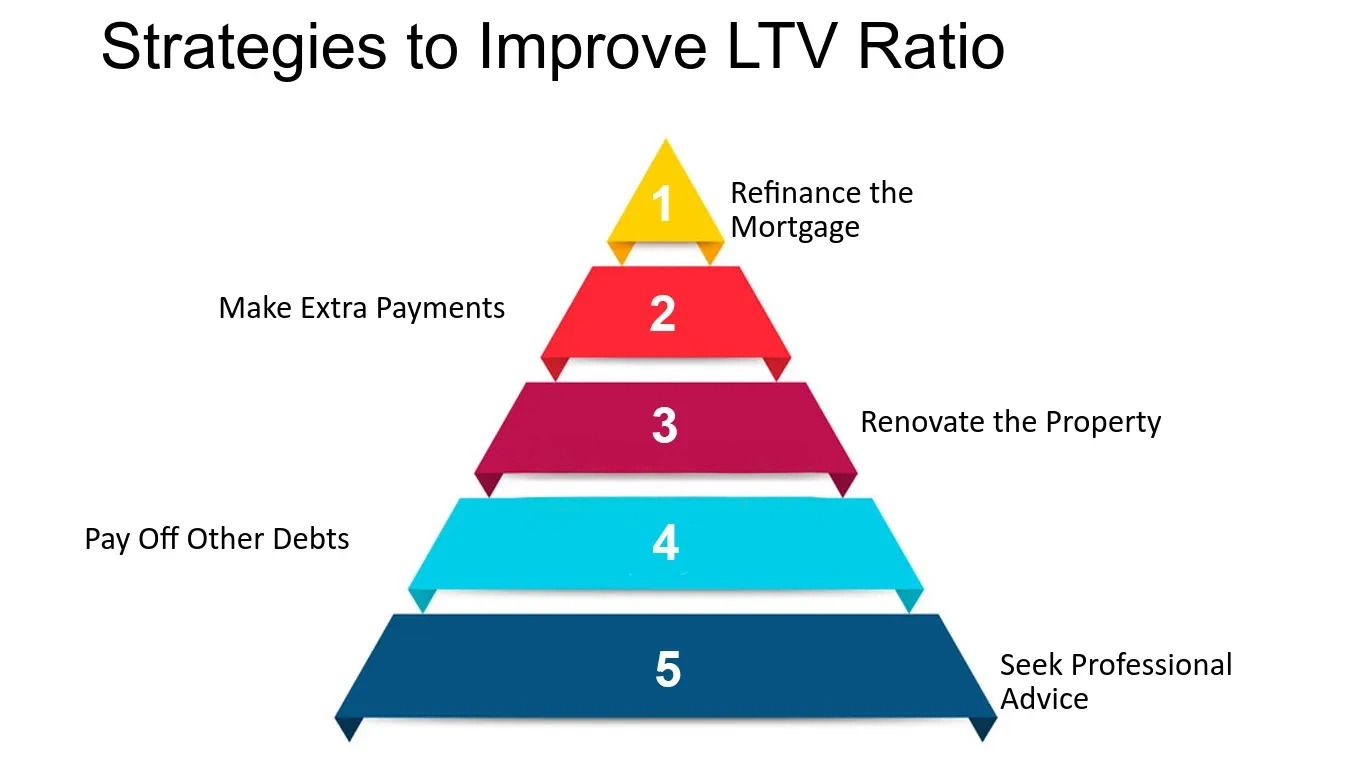
Borrowers can implement several approaches to lower their LTV ratio, potentially qualifying for better loan terms and reduced costs.
Increase Your Down Payment
Increasing your down payment is one of the most effective ways to lower your loan-to-value (LTV) ratio.
A standard 20% down payment on a $300,000 home results in an 80% LTV, while increasing it to 30% reduces LTV to 70%.
Potential funding sources include personal savings, family gifts, down payment assistance programs, or loans from retirement accounts.
Improve Property Value Through Strategic Renovations
Strategic renovations can also improve property value, thereby reducing LTV. High-ROI upgrades such as kitchen remodels (75-85% ROI), bathroom updates (70-80% ROI), and energy-efficient enhancements (60-95% ROI) contribute to higher appraised values.
Even small changes like fresh paint, landscaping, and decluttering can boost home valuations. Keeping documentation, including receipts and before-and-after photos, strengthens the case for a higher appraisal.
Accelerate Loan Repayment
Accelerating loan repayment reduces the outstanding balance over time, leading to a lower LTV.
Biweekly mortgage payments result in 13 full payments per year instead of 12, while extra principal payments-even as little as $100 per month-can accelerate equity building. Lump-sum contributions from bonuses or tax refunds directly applied to the principal can further improve LTV.
Explore Alternative Property Options
Exploring alternative property options can create a more favorable LTV position. Purchasing homes in lower-priced markets or emerging neighborhoods with strong growth potential can reduce borrowing needs.
Fixer-uppers provide another opportunity-buying below market value and improving the property through renovations builds equity from the start.
Wait For Market Appreciation
Waiting for market appreciation can naturally improve LTV over time. Historically, U.S. home values have increased by approximately 4% annually.
Refinancing after significant home price appreciation can help capture a lower LTV, while monitoring regional market trends can help identify optimal refinancing opportunities.
9. International LTV Practices
1. United States
The U.S. mortgage market features varied LTV thresholds:
- Conventional Loans: 80% LTV threshold for avoiding PMI
- Government Programs: Higher LTVs available through FHA (96.5%), VA (100%), and USDA (100%)
- Qualified Mortgages: Regulatory framework encourages lower LTVs through preferential treatment
- Regional Variations: Some high-cost areas have special LTV considerations
2. Australia
Australia implements distinct LTV (locally called LVR) practices:
- Standard Threshold: 80% LTV to avoid Lenders Mortgage Insurance (LMI)
- First Home Buyers: Government grants and programs may support higher LTVs
- Investment Properties: Often restricted to 70-80% LTV
- Self-Employed Borrowers: May face stricter LTV limits without full documentation
3. United Kingdom
The UK mortgage market features:
- Standard LTV Range: 60-95% depending on borrower profile
- First-Time Buyers: Special 95% LTV products with government backing
- Buy-to-Let: Investment properties typically limited to 75% LTV
- Help to Buy: Government scheme providing equity loans to reduce effective LTV
4. New Zealand
New Zealand implements regulatory LTV restrictions:
- Owner-Occupied Properties: Generally capped at 80% LTV
- Investment Properties: Tighter restrictions, with many lenders requiring 60-70% LTV
- Reserve Bank Influence: Active regulatory adjustments to LTV limits based on market conditions
- Regional Considerations: Auckland and other high-growth areas may have specific LTV policies
10. Risks Associated With High LTV Ratios
High LTV loans present several significant risks that borrowers should carefully consider before accepting such financing.
Underwater Mortgages And Negative Equity
When LTV exceeds 100%, the borrower owes more than the property is worth:
- Market Vulnerability: Even modest market declines can push high-LTV loans underwater
- Limited Mobility: Selling becomes difficult without bringing cash to closing
- Refinancing Restrictions: Most lenders won't refinance underwater mortgages
- Example Scenario: A 95% LTV loan requires only a 5.3% market decline to become underwater
Foreclosure And Default Risk
Research consistently shows correlation between high LTV and increased default probability:
- Limited Financial Buffer: Less equity means less cushion during financial hardship
- Psychological Factor: Lower personal investment may reduce motivation to maintain payments
- Statistical Evidence: Default rates for 95%+ LTV loans are historically 2-3 times higher than 80% LTV loans
Economic Downturn Vulnerability
During recessions, high LTV borrowers face amplified risks:
- Compounding Factors: Economic downturns often combine job losses with declining home values
- Limited Options: Fewer financial alternatives available when equity is minimal
- Historical Pattern: The 2008 housing crisis disproportionately affected high-LTV borrowers
Higher Long-Term Costs
The total cost impact of high LTV extends beyond interest rates:
- Mortgage Insurance: PMI/LMI can add 0.5-1.5% annually to loan costs
- Interest Expense: Higher rates for high-LTV loans compound over the loan term
- Opportunity Cost: Capital tied up in higher payments cannot be invested elsewhere
- Total Impact: A 95% LTV loan might cost 15-25% more over its lifetime than an 80% LTV loan
11. Market Forces And LTV Trends
Economic conditions, competitive pressures, and regulatory environments all influence LTV practices and availability.
Economic Influences On LTV Policies
Economic factors have a direct impact on LTV policies. Lower interest rates often encourage lenders to offer higher LTV ratios, while strong employment markets provide stability for riskier lending.
Housing supply and demand also affect LTV availability, as competitive markets push lenders to accommodate higher ratios. Inflation expectations further influence lending behavior, as anticipated property appreciation can justify increased LTVs.
Competitive Pressures In Lending
Competitive pressures also shape LTV offerings. Some lenders use higher LTV products as a differentiation strategy to attract borrowers, while others adjust their risk tolerance based on market conditions.
The secondary market plays a role as well, with securitization practices affecting the availability of high-LTV loans. Non-bank lenders, often more flexible in their risk assessment, tend to be more willing to extend higher LTV products.
Regulatory Impact On LTV Standards
Regulatory factors impose additional constraints on LTV practices. Central banks and government agencies implement macroprudential policies to control housing market risks, sometimes placing caps on LTV ratios.
Consumer protection regulations aim to prevent excessive leverage, while international banking standards like the Basel Accords influence capital requirements for high-LTV loans.
Additionally, government programs may promote higher LTVs for specific borrower segments, such as first-time homebuyers.
Current Market Trends (2025)
Recent developments in LTV practices include:
- Post-Pandemic Adjustments: Many lenders have recalibrated risk models
- Technology Impact: Automated valuation models have changed LTV calculation methods
- Affordability Challenges: Rising property prices have increased pressure for higher LTV options
- Investor Preferences: Secondary market has shown varying appetite for high-LTV securities
Frequently Asked Questions
What Is A Good LTV Ratio?
Generally, an LTV ratio of 80% or below is considered good. It allows you to avoid private mortgage insurance (PMI) and often qualifies you for better interest rates.
What Does 80% LTV Mean?
An 80% LTVmeans that the loan amount is 80% of the property’s value, while the borrower contributes 20% as a down payment. For example, if a home is worth $300,000, an 80% LTV would mean a $240,000 mortgagewith a $60,000 down payment.
Why Is The LTV Ratio Important In Lending?
The LTV Ratio is crucial in assessing risk for lenders; it helps determine the borrower's equity stake and influences loan approval and interest rates.
In What Financial Products Is The LTV Ratio Commonly Used?
LTV Ratio is commonly used in mortgages, auto loans, personal loans, and other credit facilities.
How Does The LTV Ratio Impact Loan Approval?
A lower LTV Ratio generally increases the likelihood of loan approval as it signifies a higher equity stake and lower risk for the lender.
Conclusion
The Loan-to-Value ratio remains a fundamental metric in mortgage lending, serving as both a risk assessment tool for lenders and a financial planning benchmark for borrowers. Understanding LTV's implications empowers more informed property financing decisions and potentially significant long-term savings.
For borrowers, maintaining awareness of LTV throughout the property ownership lifecycle offers substantial benefits. Strategic approaches to lowering LTV-whether through larger down payments, accelerated repayment, property improvements, or market timing-can yield tens of thousands in savings through reduced insurance costs and better interest rates.
Lenders continue to balance competitive pressures with risk management, resulting in evolving LTV policies. International variations demonstrate different approaches to this balance, while market forces and regulatory environments shape ongoing LTV trends.
Jump to
1. What Is The Loan-To-Value (LTV) Ratio?
2. Why LTV Matters: Significance For Lenders And Borrowers
3. Types Of Mortgage Insurance And Their Relationship To LTV
4. Calculating LTV: Methods And Common Mistakes
5. LTV In Different Loan Programs
6. Advanced LTV Concepts: CLTV And HCLTV
7. Factors Influencing LTV
8. Strategies To Improve Your LTV Ratio
9. International LTV Practices
10. Risks Associated With High LTV Ratios
11. Market Forces And LTV Trends
Frequently Asked Questions
Conclusion
Latest Articles
Popular Articles